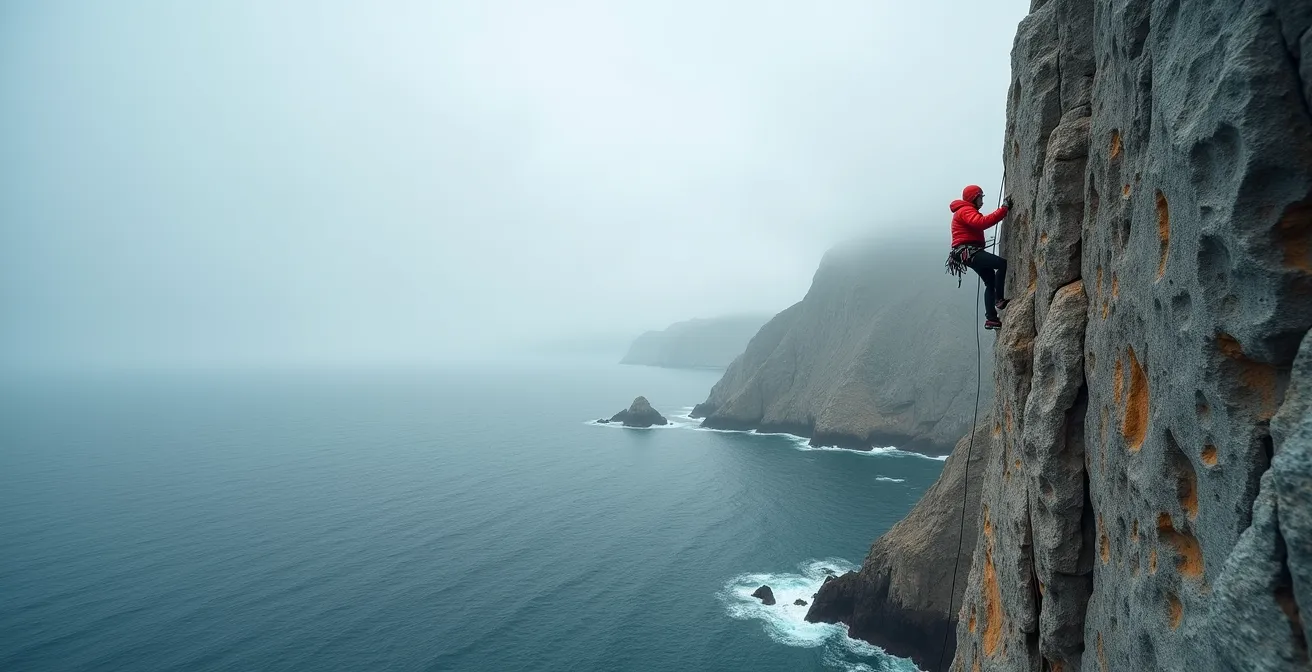
Yes, accessing most climbing sites in Quebec, including the Gaspé Peninsula, requires adherence to a specific regulatory ecosystem managed by the FQME, not a simple one-time permit.
- Access is contingent upon membership with the Fédération québécoise de la montagne et de l’escalade (FQME) or an affiliated club.
- Regulations are strict due to fragile coastal environments, active wildlife nesting sites, and unique geological heritage.
Recommendation: Before planning your trip, verify your membership status and review current site-specific advisories on the FQME website to ensure legal and ethical access.
The towering granite sea cliffs and alpine rock of Quebec’s Gaspé Peninsula present a powerful allure for climbers. It’s a landscape where the Chic-Choc Mountains meet the salty air of the Atlantic, offering a unique climbing experience far from crowded crags. However, many visiting climbers, accustomed to different access protocols, arrive with a fundamental question: what kind of permit is needed? The common assumption is a simple transaction—paying a park fee or getting a backcountry pass. This is a critical misunderstanding.
Accessing Gaspésie’s climbing areas is not about a single permit but about integrating into a provincial regulatory ecosystem. This system is designed to protect the region’s fragile environment, respect its significant geological and wildlife assets, and ensure climber safety. Simply showing up with a rope and rack is not enough. The key lies in understanding the role of the Fédération québécoise de la montagne et de l’escalade (FQME), the specific environmental threats like coastal degradation, and the non-negotiable rules around bio-specific closures for nesting birds.
But what if the true key to a successful climbing trip here wasn’t just following the rules, but understanding the ‘why’ behind them? This guide moves beyond a simple checklist. We will deconstruct the access requirements, maintenance protocols for gear exposed to salt air, and the critical importance of wildlife and geological preservation. This is your official briefing on becoming a responsible steward of Gaspé climbing, ensuring these magnificent cliffs remain accessible for generations to come.
This article provides a detailed breakdown of the regulations, environmental considerations, and gear requirements for climbing in the Gaspé region. Explore each section to fully grasp the responsibilities that come with climbing in this unique part of Canada.
Summary: A Climber’s Guide to Gaspésie Regulations
- New Route Development: What is the Acceptable Standard for Bolting in Quebec?
- Why Climbing is Better on the Atlantic Coast in Late September Than July?
- How Salt Air Affects Your Carabiners and Ropes Over a Season?
- The Nesting Season Mistake That Leads to Tower Closures
- How to Manage Rope Drag on a 70-Meter Descent in High Wind?
- Stiff vs Flexible Soles: Which Boot Prevents Ankle Rolls on Scree Slopes?
- The Tripod Placement Mistake That Causes Cliff-Edge Falls
- How to Find Fossils at Joggins Fossil Cliffs Without Breaking the Law?
New Route Development: What Is the Acceptable Standard for Bolting in Quebec?
Unlike some regions where route development is more informal, Quebec operates under a structured system overseen by the Fédération québécoise de la montagne et de l’escalade (FQME). The development of new routes, including the installation of fixed anchors and bolts, is not open to the public. It is a regulated activity reserved for certified and experienced route developers who adhere to strict provincial standards for hardware and placement. This ensures that new lines are safe, sustainable, and established with minimal environmental impact on the rock face and surrounding ecosystem.
For the average climber, this regulatory framework primarily impacts access. Gaining access to the majority of developed cliffs in Gaspésie and across Quebec is contingent upon holding a valid membership. The FQME is the principal negotiator and manager of land access agreements with private landowners and public bodies like Sépaq (Société des établissements de plein air du Québec). Membership fees directly fund these negotiations, trail maintenance, and anchor replacement programs. It is not merely a fee; it is your contribution to the sustainability of the entire climbing infrastructure.
Therefore, the first step for any visiting climber is to become part of this system. According to Mountain Project’s Quebec climbing guide, climbers can expect to pay around $65 for an FQME ‘Accès Montagne’ membership, with a reduced rate for Alpine Club of Canada members. Attempting to climb on FQME-managed land without a membership is not only a violation of the access protocol but also undermines the collective effort to maintain and secure these climbing sites for the future. Compliance is mandatory and represents the foundational pillar of responsible climbing in the province.
Why Is Climbing Better on the Atlantic Coast in Late September Than in July?
While the long, warm days of July seem ideal for a climbing trip, seasoned Gaspé climbers often point to late September and early October as the prime season. The reason lies in a combination of superior conditions for both the climber and the rock itself. July and August in Gaspésie can be characterized by high humidity, warmer temperatures, and, most notoriously, the peak season for black flies and mosquitoes, which can turn a pleasant belay into a tormenting experience. These factors can make gripping slopers difficult and detract significantly from the overall enjoyment of a route.
In contrast, late September brings a palpable change to the coastal environment. The air becomes crisp and cool, and the humidity drops, leading to significantly better friction on the granite and conglomerate cliffs. This is the “hero dirt” equivalent for rock climbers; holds that felt insecure in the summer humidity suddenly feel solid and reliable. The insect population recedes dramatically, allowing for more focused and enjoyable climbing days. Furthermore, the autumn colours of the Gaspé landscape provide a spectacular backdrop, enhancing the aesthetic reward of every ascent.
This image perfectly captures the ideal conditions of an autumn climb, where the cool, dry air enhances the texture and grip of the rock.
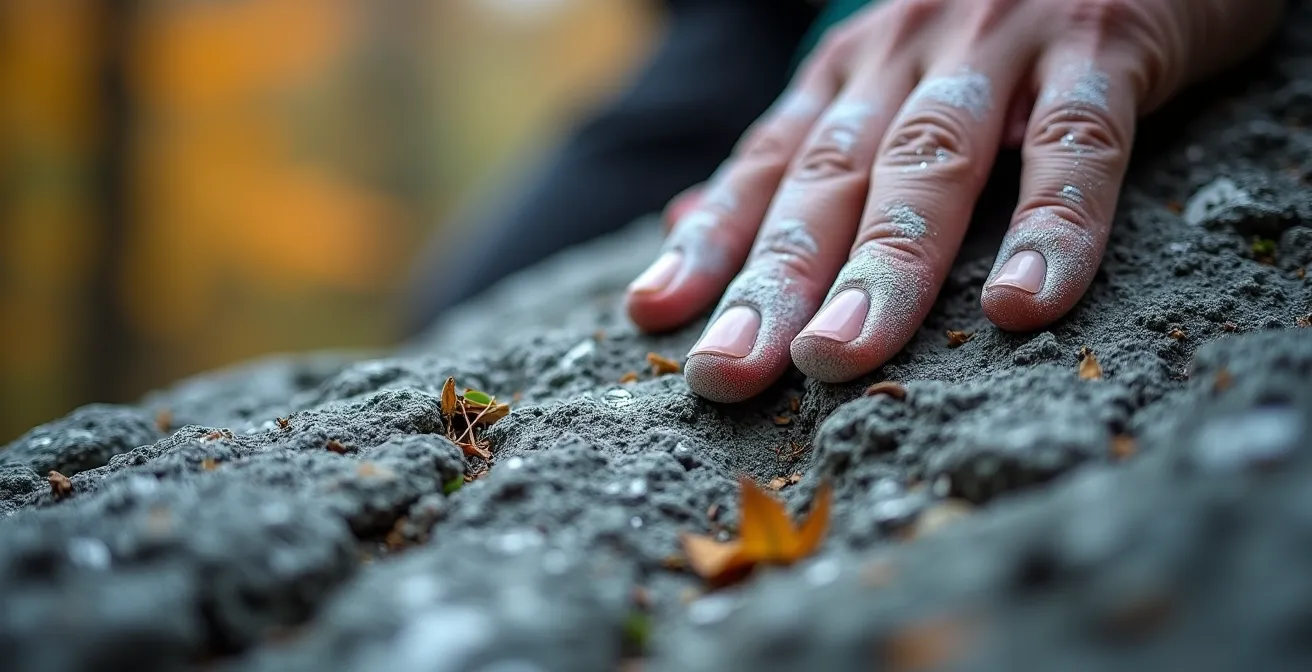
The change in conditions is more than a matter of comfort; it can be a matter of performance and safety. On friction-dependent slab routes or delicate face climbs, the increased grip offered by cooler temperatures can be the difference between a successful send and a slip. Choosing to visit in the shoulder season is a strategic decision that aligns with the natural rhythm of the peninsula, rewarding the patient climber with the best the region has to to offer.
How Does Salt Air Affect Your Carabiners and Ropes Over a Season?
The same maritime air that makes Gaspé’s landscape so dramatic is a relentless adversary to your climbing equipment. The high salinity of the coastal environment accelerates a process known as coastal degradation, which affects both metal and textile components of your gear. For metal hardware like carabiners, cams, and bolts, the primary threat is not just surface rust but more insidious forms of corrosion. Aluminum, the most common material for carabiners, can suffer from pitting and surface oxidation, weakening the device over time. Steel components are susceptible to stress corrosion cracking, a dangerous phenomenon where microscopic cracks can form in the metal under the combined influence of salt, humidity, and load.
To illustrate the severity, a comparison between gear used inland versus on the coast reveals a stark difference in lifespan and integrity.
This table, based on principles outlined in an Alpine Club of Canada safety bulletin on fixed gear, highlights how different materials react to the harsh coastal environment.
| Material Type | Coastal Environment Impact | Recommended Alternative |
|---|---|---|
| Standard Aluminum | Surface oxidation, pitting after one season | Anodized aluminum with coating |
| Stainless Steel | Stress corrosion cracking in salt/humidity | Titanium for permanent installations |
| Expansion Bolts | Accelerated corrosion in crevices | Glue-in bolts with epoxy seal |
For soft goods like ropes and slings, the salt crystals are abrasive on a microscopic level. They can work their way into the fibres of the rope’s core, causing internal abrasion that is invisible from the outside. This significantly reduces the rope’s strength and its ability to absorb the force of a fall. It is incumbent upon any climber in a marine environment to adopt a rigorous post-climb maintenance protocol.
Action Plan: Coastal Gear Maintenance Protocol
- Rinse all metal hardware in fresh hot water immediately after coastal climbing.
- Open and close cam heads and carabiner gates while submerged to flush salt deposits.
- Scrub with a soft toothbrush and solvent-free dish soap for stubborn deposits.
- Dry thoroughly in a ventilated area away from direct sunlight to prevent textile damage.
- Apply a silicone-based dry lubricant to all moving parts, wiping away any excess.
The Nesting Season Mistake That Leads to Tower Closures
One of the most significant aspects of climbing ethics in Gaspésie is coexisting with its abundant wildlife, particularly its seabirds. The region’s cliffs, including the iconic Percé Rock, are vital nesting grounds for protected species like the Northern Gannet and the Peregrine Falcon. A common but grave mistake visiting climbers make is assuming a cliff is open for climbing simply because it is physically accessible. In Quebec, many climbing areas are subject to bio-specific closures during the critical nesting season, typically from late spring to late summer.
Disturbing nesting birds, even unintentionally, can cause them to abandon their nests, leaving eggs or young vulnerable. The presence of climbers can be perceived as a predatory threat, leading to significant stress on the colony. As a result, park authorities and the FQME enforce strict, non-negotiable closures of entire walls or formations to protect these species. A prime example is Percé Rock, an iconic landmark where the presence of large nesting seabird colonies makes climbing access highly restricted and often completely forbidden. Climbers must check the current access status before even considering an approach, as violations can lead to heavy fines and jeopardize future access for the entire climbing community.
Park rangers and FQME representatives work to educate climbers on the importance of these closures, emphasizing a philosophy of respect and stewardship.
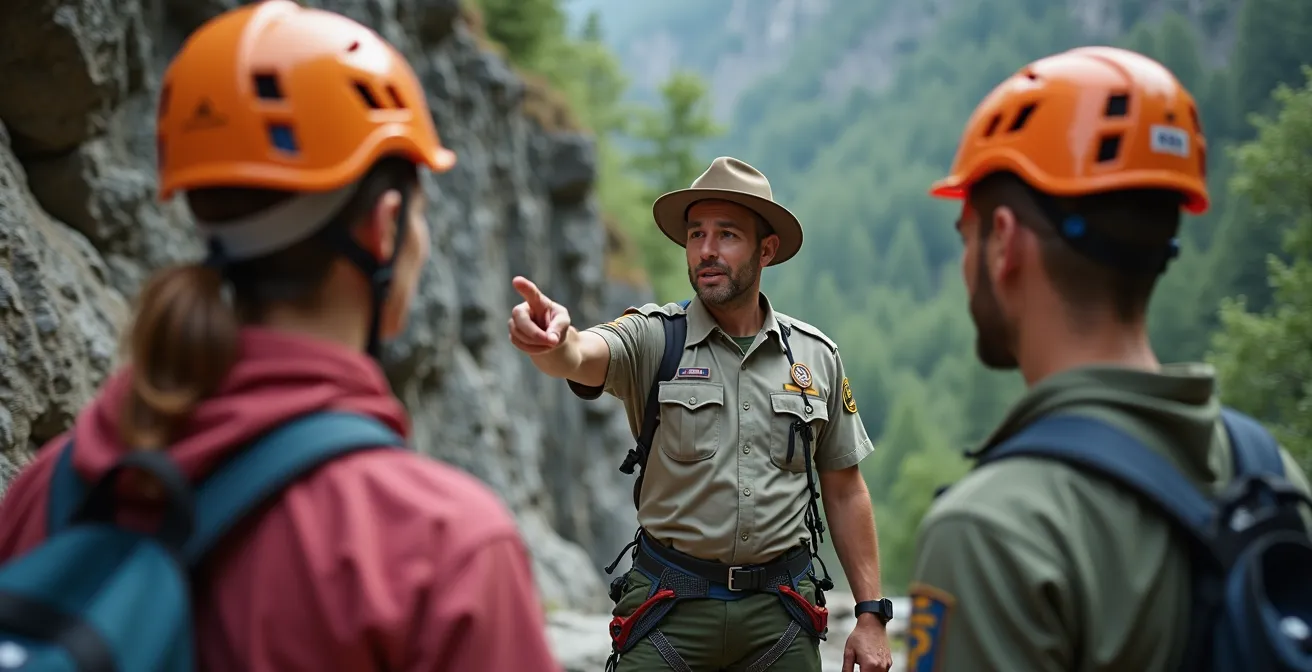
Before any climb in Gaspésie, it is the climber’s absolute responsibility to check for current wildlife advisories. This information can typically be found on the FQME website, the relevant Sépaq park page, or via posted signs at trailheads. Ignoring a posted closure is not just poor ethics; it is a legal violation and a profound disrespect to the natural heritage of the region. The mantra must be: check before you climb, every single time.
How to Manage Rope Drag on a 70-Meter Descent in High Wind?
The topography of Gaspé’s coastal cliffs presents unique technical challenges, among which rope drag and wind management are paramount. Many routes, particularly on formations like Mont-Saint-Pierre, are not straight vertical cracks. They often follow long, wandering gullies that traverse onto exposed arêtes, creating numerous points of friction. On a long pitch, this can result in debilitating rope drag that makes upward progress difficult and communication with your belayer nearly impossible. This challenge is compounded on descent, especially when rappelling a full 70-meter rope length in the high winds common to the region.
The “St. Lawrence Wind Tunnel” effect, where offshore winds accelerate along the peninsula, can turn a rappel into a serious ordeal. A rope thrown into the wind can be blown into cracks, get snagged on flakes, or even be blown back upwards, creating a tangled mess. Managing this requires specific techniques. The most effective methods involve using extended runners (alpine draws) on wandering sections during the ascent to straighten the rope path. When rappelling, it’s often wiser to break a long descent into multiple shorter rappels if intermediate anchors are available. If a full-length rappel is necessary, keeping the rope ends coiled and deploying them carefully only when you are weighted on the system can help prevent them from being swept away by gusts.
The case of Mont-Saint-Pierre’s northwest face is instructive. As noted by climbers on Mountain Project, its routes rise directly above Highway 132 and feature a meandering character that demands advanced rope management skills. Success on these lines is as much about technical proficiency in mitigating drag and wind as it is about physical climbing ability. Climbers must be adept at using directional placements and long slings to create the straightest possible line for the rope to travel.
Stiff vs. Flexible Soles: Which Boot Prevents Ankle Rolls on Scree Slopes?
The approach to a Gaspé cliff can be as challenging as the climb itself. The terrain is notoriously varied, ranging from the muddy, root-filled trails of Forillon National Park to the notoriously unstable and sharp-edged scree slopes found at the base of cliffs near Percé or in the Chic-Choc alpine. Choosing the correct footwear is not a matter of comfort, but of safety and efficiency. The debate between stiff and flexible soles is central to this choice, and the answer depends entirely on the specific terrain you will encounter.
For navigating treacherous scree slopes, a stiff-soled boot with strong ankle support is unequivocally the superior choice. The rigidity of the sole prevents sharp rocks from bruising the bottom of your foot and provides a stable platform, reducing the likelihood of the dreaded ankle roll that can end a trip. The stiffness also allows for precise edging on small rock nubbins during a scramble. A flexible, trail-runner-style shoe, while light, offers little protection and stability on this type of loose, angular terrain. Conversely, on well-maintained but muddy trails, a more flexible sole with deep lugs can provide better traction and a more natural gait.
This variety is why many local climbers select their approach shoes with surgical precision, as highlighted by this terrain-specific breakdown.
Data from resources like PeakVisor’s guide to La Haute-Gaspésie helps inform the ideal boot selection for the peninsula’s diverse approach conditions.
| Terrain Type | Recommended Sole Stiffness | Key Features Needed |
|---|---|---|
| Forillon Park Muddy Trails | Flexible to Moderate | Deep lugs, water resistance |
| Percé Unstable Scree | Stiff | Ankle support, precise edging |
| Wet Mossy Approach Slabs | Moderate with sticky rubber | Friction sole, drainage channels |
| Chic-Chocs Alpine Tundra | Very Stiff | Crampon compatibility, insulation |
As contributors to the Mont Jacques-Cartier guide on SummitPost astutely note, the more remote areas require careful preparation. They state:
The McGerrigle mountains offer a vastly superior experience with variety of terrain and absence of crowd, making appropriate footwear selection crucial
– SummitPost Contributors, Mont Jacques-Cartier Climbing Guide
The Tripod Placement Mistake That Causes Cliff-Edge Falls
The dramatic vistas of the Gaspé Peninsula are a powerful magnet for climbers who are also passionate photographers. Capturing the perfect shot from a cliff edge, however, introduces a new and often underestimated set of risks. A common and dangerous mistake is prioritizing the camera’s position over personal and equipment security. Specifically, setting up a tripod too close to an unstable edge or without a redundant anchor system is a frequent cause of accidents, ranging from lost equipment to catastrophic falls.
The fundamental principle of cliff-edge work, whether climbing or taking photos, is “bomber anchors first.” Before any camera equipment is unholstered, the photographer must be secured to a reliable anchor system, just as a climber would be at a belay station. The tripod itself should also be considered a critical piece of gear that needs securing. In windy conditions, a gust can easily topple a tripod, sending thousands of dollars of camera gear plummeting. A simple sling girth-hitched to the tripod’s center column and clipped to a separate, redundant piece of protection can prevent this loss.
It is also critical to understand the geology of the cliff edge itself. The sandstone ledges around areas like Percé Rock are known to be fragile and can crumble under weight. Parks Canada and FQME advisories often identify these zones of “no-go” terrain. Placing a tripod leg on, or weighting, such a feature is a recipe for disaster. The protocol for cliff-edge photography demands maintaining three points of contact with the rock whenever possible, especially when leaning over to adjust a camera, and always testing the stability of your stance and your tripod’s placement before committing your weight or your gear.
Key Takeaways
- Climbing access in Gaspé is governed by the FQME; a membership is required, not a simple permit.
- The coastal environment requires rigorous gear maintenance to combat corrosion and fabric degradation from salt air.
- Strict, non-negotiable closures are in effect during bird nesting seasons; always verify the current status of a cliff before approaching.
How to Find Fossils at Joggins Fossil Cliffs Without Breaking the Law?
The mention of “Fossil Cliffs” often brings to mind the famous Joggins Fossil Cliffs. However, it is crucial for visiting climbers to know that Joggins is located in the neighbouring province of Nova Scotia and operates under its own set of preservation laws. The direct equivalent and a site of immense paleontological importance in Quebec is Miguasha National Park, a UNESCO World Heritage site located on the southern coast of the Gaspé Peninsula. This park is renowned for its exceptionally well-preserved Devonian period fossils, which offer a complete picture of the “Age of Fishes.”
For climbers, the existence of such a site highlights a deeper layer of responsibility: the protection of geological heritage. While climbing is not the primary activity within Miguasha Park itself, the principle extends to the entire region. The cliffs and rock formations of Gaspésie are not just climbing structures; they are historical records. As such, they fall under the protection of Quebec’s Cultural Heritage Act. This act prohibits the disturbance, damage, or removal of any paleontological artifact. Finding a fossil at the base of a cliff does not mean it’s a souvenir. The law is clear: all fossils must be left in place and their location reported to park authorities or the relevant ministry.
This intersection of recreation and preservation is what makes the region so special. As noted by Quebec Adventure Outdoor, Gaspésie’s identity is built on this very combination: “From its acclaimed Perce Rock, Bonaventure Island and northern gannet population to its UNESCO World Heritage status”. This is not just a playground; it is a living museum. Any climber attempting routes in the region must act as a steward of this heritage. This means no indiscriminate chipping of rock for holds, no bolting without official sanction, and absolutely no collection of fossils or unique geological specimens.
Frequently Asked Questions About Climbing in Gaspésie
What weather conditions create the ‘St. Lawrence Wind Tunnel’ effect?
The Gaspé Peninsula’s position along the St. Lawrence creates offshore winds that are particularly challenging, with ocean-warmed air creating unpredictable gusts that complicate rappelling on exposed coastal cliffs.
How long are typical approach times to Gaspé climbing areas?
Approaches in the L’Anse-Pleureuse area are considered long by Gaspé standards, ranging from half a mile to just under four miles south of town above Route 198.