In summary:
- Finding an authentic Cape Breton kitchen party is less about specific venues and more about understanding cultural timing and social cues.
- Look for the “second set” after 10:30 PM, when the formal performance ends and local musicians begin to play for themselves.
- Prioritize small community halls in towns like Mabou and Judique over famous, crowded pubs for a more intimate experience.
- Learn to distinguish traditional fiddle styles and participatory “cèilidhs” from formal concerts to identify genuine gatherings.
- Engage with the community by buying 50/50 tickets or CDs directly from artists to shift from an outsider to a welcome participant.
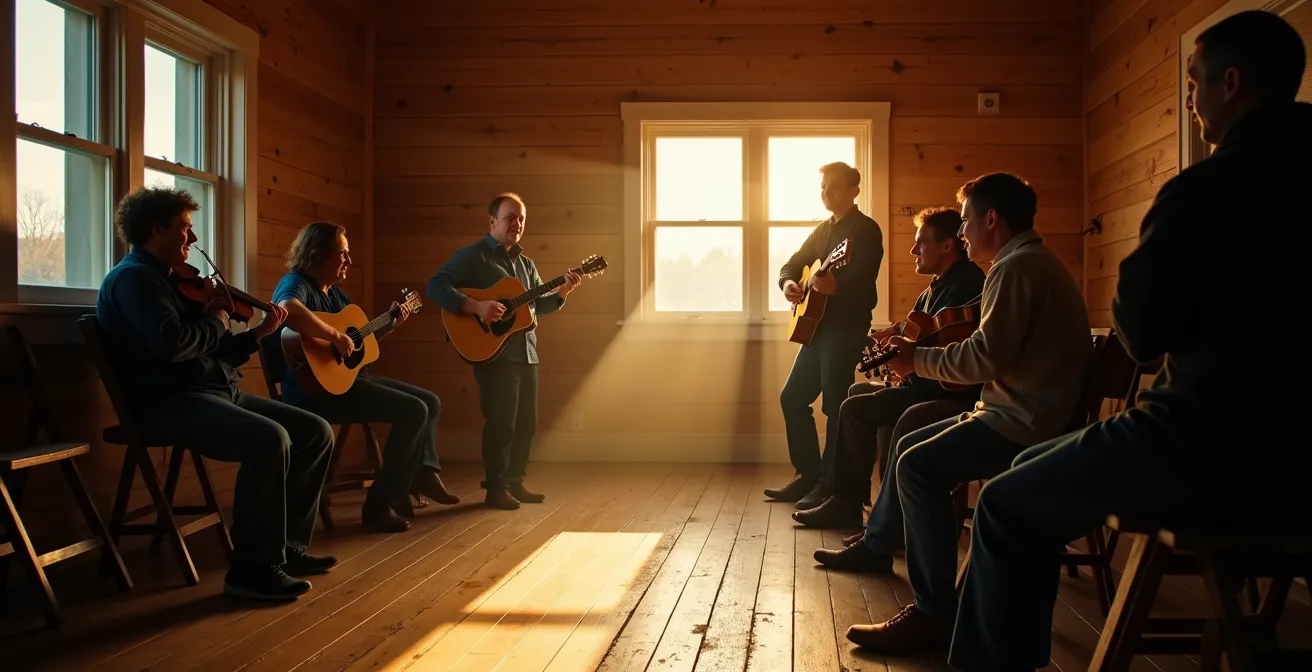
You’ve heard the stories: a cozy kitchen in Cape Breton, filled with the driving rhythm of a fiddle, the stomping of feet, and the shared joy of a spontaneous musical gathering. This is the legendary “kitchen party,” the authentic heart of the island’s Celtic culture. Yet, as a visitor, you arrive to find scheduled concerts, formal venues, and shows that, while excellent, feel more like a performance than a party. The energy is there, but the intimate, participatory spirit you came for seems just out of reach, separated by a stage and a quiet, attentive audience.
Many guides will point you to the most famous pubs or the largest festivals, treating the search for authentic music like a checklist of tourist spots. But this approach often misses the point entirely. The magic of a true Cape Breton cèilidh isn’t a location you can simply enter; it’s a moment you have to recognize. It’s a subtle shift in the atmosphere when the formal part of the evening ends and the real community gathering begins. The key isn’t knowing where to go, but understanding *how* to see and *when* to listen.
This guide offers a different strategy. Instead of a map of venues, it provides a set of cultural keys. We’ll explore the unspoken rules of “Cape Breton Time,” learn the musical cues that separate a traditional reel from a modern tune, and discover why the most authentic experiences often happen long after the official show is over. By learning to decode these signals, you can transform your experience from that of a spectator at a concert to a welcome participant in a genuine kitchen party, no matter the venue.
This article breaks down the essential strategies for finding that authentic vibe. From understanding local schedules to knowing how to interact with the community, you’ll gain the insider knowledge needed to experience the true spirit of Cape Breton’s music scene.
Summary: Finding the Real Celtic Heartbeat of Cape Breton
- The Open Mic Night Schedule: When Do Local Fiddlers Play Unannounced?
- What is a “Cèilidh” and How Does It Differ From a Concert?
- The Venue Size Trap: Why You Must Book Small Shows Weeks in Advance?
- The “Polka Test”: Which Music Venues Are Playing Traditional vs Modern Fiddle?
- When Does the Music Really Start at the Inverness Hall on a Tuesday?
- The Diner Mistake: Why You Should Avoid Places with “Tourist Special” on the Menu
- Festival or Local Fair: Which Event Is More Welcoming to Outsiders?
- How to Drive the Entire Cabot Trail in One Day Without Rushing the Views?
The Open Mic Night Schedule: When Do Local Fiddlers Play Unannounced?
The first mistake many visitors make is relying solely on official online schedules. The most electric, unscripted musical moments in Cape Breton are rarely advertised. The real “kitchen party” vibe emerges in the spaces between formal events, often late at night. This is known as the “second set”—the session after the main performance, when local musicians who have been in the audience or on the sidelines finally take over and play for each other. This typically happens after 10:30 PM, once the crowds have thinned and the atmosphere becomes more relaxed and intimate.
To find these sessions, you need to think like a local. Instead of just checking websites, visit the physical bulletin boards at Co-op grocery stores and post offices in towns like Mabou and Cheticamp. Here, you’ll find handwritten notices for community cèilidhs and square dances that never make it online. Another key indicator is the presence of step-dancers. When you see older community members getting up to dance, or even just tapping their feet with intensity, you’ve found the real thing. Their participation is a stamp of authenticity.
Don’t be afraid to show up at a venue known for its music, like the Celtic Music Interpretive Centre in Judique for its daily lunch cèilidhs, and simply listen. The Baddeck Gathering Ceilidh, for example, built its success on being a welcoming space where anyone can perform, from Gaelic College teachers to visiting students. It’s this open, participatory spirit that you’re looking for, not just a polished performance.
What is a “Cèilidh” and How Does It Differ From a Concert?
In Cape Breton, the word “cèilidh” (pronounced kay-lee) is often used to describe musical events, but its meaning is crucial to understand. A cèilidh is not a concert. A concert is a performance where the audience is expected to sit in quiet attention. A cèilidh is a social gathering with music at its heart. The line between performer and audience is blurred, and participation is not just welcomed—it’s expected. This fundamental difference is the key to finding the kitchen party atmosphere you’re seeking.
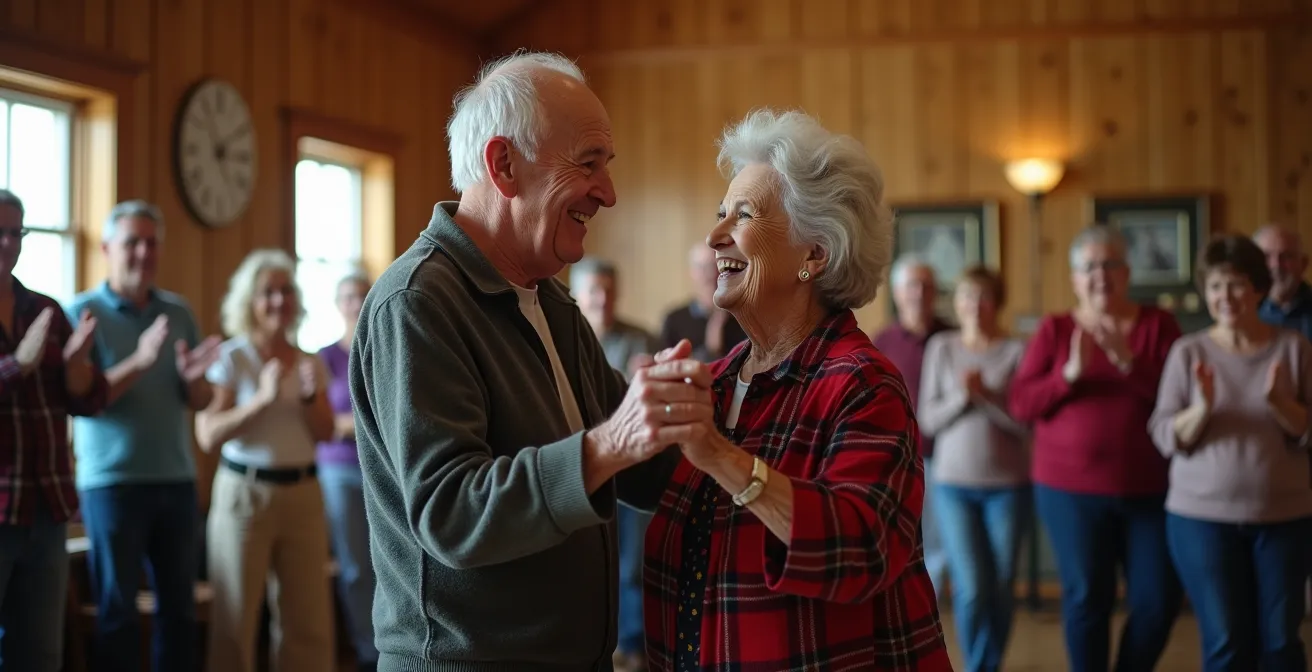
At a true cèilidh, you’ll see clapping, foot-stomping, and spontaneous dancing. The event is a mix of music, storytelling, and community connection. A key component is often “the lunch,” a social break where tea, coffee, and homemade sweets like oatcakes and squares are served. This is where conversations happen and the community reinforces its bonds. If you find yourself at an event that includes this tradition, you’re in the right place. The atmosphere is informal, community-focused, and you’ll often hear snippets of Gaelic spoken, connecting the event directly to its deep cultural roots.
The following table breaks down the essential differences to help you identify a genuine cèilidh experience.
| Aspect | Cèilidh | Concert |
|---|---|---|
| Participation | Expected: clapping, stomping, dancing | Quiet attention expected |
| Format | Social gathering with music | Musical performance |
| Components | Music, storytelling, ‘lunch’ (tea/sweets) | Primarily music performance |
| Atmosphere | Informal, community-focused | Formal, performer-focused |
| Language clues | Gaelic snippets common | English-dominant |
The Venue Size Trap: Why You Must Book Small Shows Weeks in Advance?
While large, famous venues like the Red Shoe Pub in Mabou are iconic, they can sometimes fall into the “venue size trap.” Their popularity means they are often crowded with tourists, leading to a more formal concert-like atmosphere where the spontaneous, intimate feeling of a kitchen party is harder to find. The most authentic sessions often happen in much smaller, less famous spaces: the community halls in places like West Mabou and Glencoe Mills. These venues are the true heart of the local music scene, but their limited capacity means you must plan ahead.
The deep-rooted musical tradition in this part of Canada isn’t a modern tourist invention. It stems from the history of over 30,000 Scottish Gaels who emigrated to Cape Breton between the late 1700s and mid-1800s, bringing their language, culture, and music with them. This heritage is preserved in small, tight-knit communities, and the best way to experience it is to join them on their own turf. This often means booking tickets for community hall cèilidhs weeks, or even months, in advance, especially during the peak summer season.
A smart strategy is to visit during the “shoulder season” in June or September when there are fewer tourists and more locals in attendance. Also, look beyond the most famous names. The Doryman Pub & Grill, for instance, offers an equally intimate experience. If a show is sold out, try the “waitlist & mingle” approach: show up anyway, be friendly with the staff, and you might get lucky. And don’t forget about festivals like KitchenFest!, which organizes over 100 events in dozens of smaller venues across the island in late June and early July.
The “Polka Test”: Which Music Venues Are Playing Traditional vs Modern Fiddle?
Not all Celtic music is the same. To find the authentic kitchen party sound, you need to train your ear to recognize the specific style of Cape Breton fiddle. This acts as a “musical litmus test.” As the Canadian Studies Center at the University of Washington notes, the local tradition is distinct. In their Cape Breton Music Collection, they observe:
Cape Breton fiddle has a powerful rhythmic feel affected with quick snaps of the bow, rapid-fire ornaments and forceful bowing patterns. Indeed, the Cape Breton style is the most rhythmic Celtic fiddle style.
– Canadian Studies Center, University of Washington – Cape Breton Music Collection
This powerful, percussive sound is designed for dancing. If the music makes you want to tap your feet, you’re on the right track. Another key element to listen for is the piano. In Cape Breton music, the fiddle and piano work as a duo to create a strongly-accented dance rhythm. The piano style is unique, featuring a driving, percussive accompaniment that is very different from other Celtic traditions. The presence of renowned local pianists like Mac Morin or Tracey Dares is a guarantee of an authentic sound.

This is what locals mean when they talk about “good dance music.” It’s not about being modern or polished; it’s about a raw, driving energy that connects directly to the tradition of community square dances held in church basements and local halls for generations. When you hear that specific, powerful rhythm, you know you’ve moved beyond a generic tourist show and into the heart of Cape Breton’s living culture.
When Does the Music Really Start at the Inverness Hall on a Tuesday?
One of the most important concepts to grasp is “Cape Breton Time.” Official start times on posters and websites are often just suggestions. A cèilidh listed as starting at 9 PM might mean that’s when the musicians begin to arrive, tune up, and socialize. The real energy often doesn’t build until closer to 9:45 PM. Patience is essential; arriving “on time” might mean you’re an hour too early for the best part.
A perfect example is the Tuesday night session at the Inverness County Centre for the Arts. It’s advertised as a “learning session” starting at 7 PM, where beginners can play. While this is a wonderful community event, the real magic for a visitor seeking a high-energy performance happens later. The more advanced, informal session often emerges around 8:30 PM, after the official learning portion is over. Sticking around is key. Similarly, at many community hall events, the best music happens during the “second set,” after the traditional tea break around 10:30 PM.
This relaxed approach to time stands in stark contrast to large-scale, tightly scheduled events. The Celtic Colours International Festival, for instance, is a massive undertaking, featuring more than 80 events across the island over nine days. While an incredible festival, its structure is necessarily more rigid. The kitchen party vibe is found in the moments of spontaneity that defy a strict schedule. Understanding and embracing “Cape Breton Time” allows you to be present when those unscripted, memorable moments finally unfold.
The Diner Mistake: Why You Should Avoid Places with “Tourist Special” on the Menu
Just as the most authentic music isn’t always in the most obvious venues, the most authentic food experience isn’t found in restaurants advertising a “Tourist Special.” The true culinary heart of a cèilidh experience is the “lunch” served at the event itself. This isn’t a full meal, but a social tradition of serving homemade oatcakes, squares, cookies, and tea during the intermission. This is the real taste of Cape Breton hospitality, and participating in it is part of the experience.
To find authentic food before a show, adopt the same mindset as finding music: think like a local. A great rule of thumb is the “Lick-A-Chick Litmus Test.” This Bras d’Or-based fried chicken spot is a local legend—unpretentious, quirky, and beloved. If a local recommends a place like this over a fancy seaside restaurant, you’re on the right track. The best pre-show meals are often at the dining rooms of the pubs themselves, like the Red Shoe Pub, where musicians and locals eat because the food is genuinely good, not just because it’s famous.
Don’t overlook unassuming spots. Gas stations and general stores are often the best places to find authentic, locally-made oatcakes and biscuits. Ultimately, the biggest “diner mistake” is separating the search for food from the search for music. They are intertwined. Attending an event like KitchenFest! allows you to enjoy the music, hospitality, and food all in one place, capturing the spirit of one big Cape Breton kitchen cèilidh.
Action Plan: Finding Authentic Pre-Show Dining
- Follow the ‘Lick-A-Chick Litmus Test’: Prioritize quirky, unpretentious spots recommended by locals over fancy tourist restaurants.
- Eat where the musicians eat: Visit the dining rooms of musical pubs for their food quality, not just their fame.
- Check unexpected places: Look in local gas stations and general stores for authentic, homemade oatcakes and biscuits.
- Plan to eat at the event: Save room for the traditional ‘lunch’ of homemade treats served during the cèilidh tea break.
- Avoid the ‘Tourist Special’: If a menu advertises this, it’s a red flag. Seek out local pizza joints or diners frequented by performers instead.
Festival or Local Fair: Which Event Is More Welcoming to Outsiders?
It may seem counter-intuitive, but a large, well-organized festival can sometimes be more welcoming to an outsider than a small, intimate local fair. At a tiny community hall, a new face stands out, and it can be intimidating to break into tight-knit social circles. Larger events like the Celtic Colours International Festival, however, are designed to welcome visitors and often cultivate a “kitchen party” atmosphere on purpose. The key is knowing where to find it within the larger structure.
The “Festival Club” at Celtic Colours is a perfect example. It’s the unofficial late-night venue where musicians from the day’s concerts gather to jam informally until the early hours of the morning. This is where the scheduled performances give way to spontaneous collaboration, creating the exact atmosphere of a kitchen party. The festival’s overall vibe is described as casual and down-home, intentionally recreating that feeling of being a guest in a Cape Breton home.
However, if you do attend a smaller community concert, there are simple ways to shift your status from “outsider” to “welcome guest.” The moment you arrive, buy a 50/50 ticket. This small gesture immediately signals your support for the community. After a performance, take a moment to compliment a local step-dancer. Ask locals about their family’s connection to the area, showing genuine interest in their heritage. The most powerful gesture? Buy CDs directly from the performers at the venue. This direct support is deeply appreciated and marks you as a true supporter of the culture, not just a passive consumer.
Key takeaways
- Authenticity is a feeling, not a location. Focus on participatory cèilidhs over formal concerts.
- Time is fluid. The best music often starts late, during the “second set,” so patience is essential.
- Look for insider cues: foot-tapping locals, the serving of a traditional “lunch,” and the specific, driving rhythm of Cape Breton fiddle music.
How to Drive the Entire Cabot Trail in One Day Without Rushing the Views?
The Cabot Trail is the scenic artery of Cape Breton, but for a music seeker, it’s more than just a drive—it’s a strategic route. The biggest mistake is trying to “do” the whole trail as a sightseeing marathon. Instead, think of the trail as a string connecting the “pearls” of authentic cultural experiences. To do this effectively in one day without feeling rushed, you must have a plan, and that plan should be driven by the music schedule.
The best strategy is to drive counter-clockwise. This saves the most dramatic coastal views along the western shore for the beautiful afternoon light. More importantly, it positions you perfectly for the evening’s main event: music. The west coast of the island, particularly the area around Inverness and Mabou, is the heartland of the evening music scene. By ending your day here, you can seamlessly transition from sightseeing to cèilidh-hopping.
This approach requires making smart trade-offs. Instead of spending two hours hiking the crowded Skyline Trail at midday, use that time to attend the 90-minute lunch cèilidh at the Celtic Music Interpretive Centre in Judique. Use the trail to connect a morning workshop in St. Ann’s (home of the Gaelic College) with a midday session in Judique and an evening dance in West Mabou. As Destination Cape Breton highlights, the island’s culture is best experienced through this kind of immersion. Don’t be afraid to explore the side roads just a few kilometers off the main route; this is where you’ll find the hidden community halls that host the most memorable musical gems.
By shifting your perspective from that of a tourist to an active, knowledgeable participant, you unlock the true spirit of Cape Breton. The next step is to take this mindset and apply it on the ground, listening not just with your ears, but with an understanding of the culture that makes the music come alive.