
In summary:
- To find authenticity, shift your focus from seeking picturesque spots to understanding the rhythms of a working waterfront.
- Respectful engagement is key; learn to read social cues and understand the local work schedule before approaching anyone.
- Authenticity lies in provenance. Question where food, art, and even cultural experiences come from.
- Use official resources like tide tables and fisheries notices to align your visit with the real-life activity of the community.
Every traveller has seen the image: a colourful fishing village, boats bobbing in the harbour, a lighthouse standing sentinel. Yet, arriving at that picture-perfect spot, you often find it’s less a living community and more a parking lot for tour buses. The search for the “real” maritime soul of Canada, away from the crowds of Peggy’s Cove and the generic souvenir shops, can feel like a losing battle. The common advice—go early, eat where it’s busy—often leads you right back into a polished, pre-packaged experience designed for mass consumption.
But what if the key wasn’t about finding a secret, untouched village? What if, instead, it was about learning to see the authenticity that exists even in well-known places? The true art of the cultural traveller is not in discovering a new map, but in learning to read the one that’s already there. This guide is built on a different premise: to experience an authentic fishing village, you must think less like a tourist and more like a cultural anthropologist. It’s about decoding the community rhythms, understanding the unspoken etiquette of a working waterfront, and recognizing the markers of genuine local life.
This approach transforms your visit from a passive sightseeing tour into an active, respectful engagement. It equips you with the tools to look past the postcard facade and connect with the very real, very hardworking heart of Canada’s maritime heritage. We will explore how to time your visit for maximum authenticity, how to interact with locals without being intrusive, and how to tell the difference between a genuine craft and an imported trinket. By learning to see the village as a place of work and community, not just a backdrop for photos, you unlock a much deeper and more rewarding experience.
This article provides a complete framework for your journey. From the counter-intuitive benefits of a winter visit to the practical skill of reading tide tables, each section offers a piece of the puzzle to help you engage with these communities on their own terms.
Summary: A Guide to Finding an Authentic Canadian Fishing Village
- Why Visiting a Fishing Village in Winter Offers a Truer Glimpse of Daily Life?
- How to Ask a Fisherman About Their Catch Without Being Intrusive?
- Authentic Local Art or Imported Souvenir: How to Tell the Difference in Lunenburg?
- The Diner Mistake: Why You Should Avoid Places with “Tourist Special” on the Menu
- When to Visit the Harbor to See the Fishing Fleet Unload the Catch?
- How to Find an Authentic Screech-In Ceremony vs a Tourist Bar Version?
- Charcuterie Board: Which Canadian Cured Meats Are Truly Artisanal?
- How to Read Tide Tables to Avoid Getting Trapped on the Mudflats?
Why Visiting a Fishing Village in Winter Offers a Truer Glimpse of Daily Life?
The instinct for most is to visit a maritime village in the sunny peak of summer. Yet, this is when the community’s authentic pulse is often most obscured by seasonal tourism. To truly understand the resilience and character of these places, consider a winter visit. The off-season strips away the temporary layers, revealing the village’s true form: a working waterfront. This is when you’ll see the essential, unglamorous work that sustains the community year-round—mending nets, repairing hulls, and preparing for the seasons ahead. The harbour, quiet and stark against a winter sky, is not dormant; it’s in a state of focused preparation.
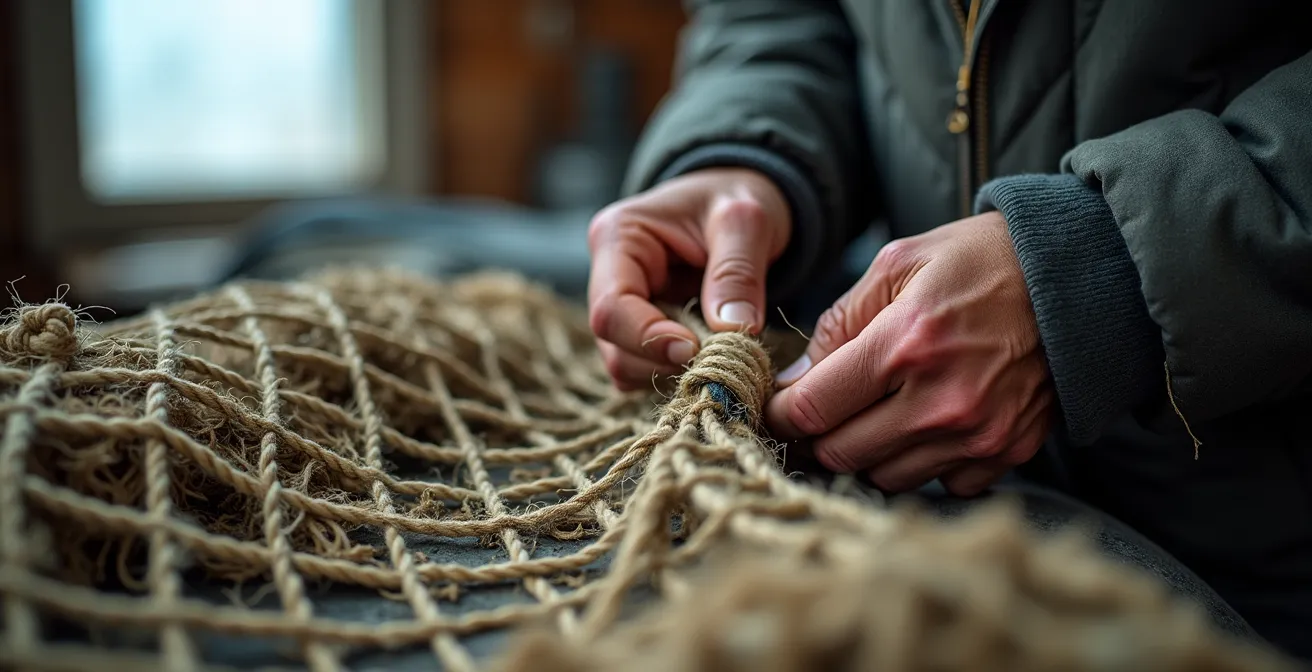
This period of quiet industry is a fragile ecosystem. The fishing sector in Atlantic Canada faces a steady decline, with projections showing a 0.4% annual employment decline expected through 2025-2027. Your off-season visit, supporting a local B&B or diner, provides vital income when it’s needed most. You’re not just a spectator; you’re a participant in the local economy at a critical time. The conversations are longer, the pace is slower, and the experience is infinitely more personal.
To witness this, you must align with the specific community rhythms of winter fishing. Activity doesn’t stop; it just changes. Different fisheries have different seasons, and timing your visit accordingly is key. For example:
- The lucrative winter lobster season in Southwestern Nova Scotia (LFA 34) kicks off with “Dumping Day” in late November, a chaotic and spectacular community event.
- Scallop draggers can be seen operating year-round in the Bay of Fundy, providing consistent activity at the docks.
- In Quebec, the ice fishing season for smelt runs from December through February, creating unique scenes on frozen bays.
By visiting in winter, you trade the crowds for authenticity. You witness the hard work that underpins the postcard beauty, and you see the community not as it performs for tourists, but as it truly is.
How to Ask a Fisherman About Their Catch Without Being Intrusive?
The desire to connect with the people whose livelihood defines the village is natural. However, approaching a fisherman on the dock requires a deep sense of respect and timing. The most common mistake is viewing the wharf as a tourist attraction rather than a place of intense, often dangerous, work. Asking questions during a busy unloading operation or when someone is troubleshooting tangled gear is not just intrusive; it’s a safety hazard. The key is to apply cultural etiquette, observing before you engage.
Look for the natural lulls in the workday, the moments when the high-stakes pressure is off. These are your windows of opportunity for a respectful conversation. In some communities, this interaction is an established part of the local culture. For instance, in Steveston Village, British Columbia, the “Fishermen’s Wharf” is designed for direct-to-consumer sales, where visitors can browse boats selling salmon and prawns right off the vessel. Here, conversation is expected and welcomed. In a small Newfoundland outport, the etiquette might be entirely different. Your first job is to observe the local norms.
Pay attention to visual cues that signal appropriate times for a brief chat:
- Good Times: Notice when crews are casually mending nets on the dock, washing down decks at the end of the day, or taking a coffee break (often around 10 AM and 3 PM). These are moments of lower intensity.
- Bad Times: Steer clear during active docking manoeuvres, when forklifts are moving crates, or if you see any sign of equipment malfunction. A tense posture or hurried movements are clear signals to keep your distance.
When you do find a quiet moment, the best approach is indirect. Instead of a blunt “What did you catch?”, start with a general, respectful observation: “Looks like a long day,” or “That’s a beautiful boat.” Let them lead the conversation. If they are open to talking, they will engage. If their answers are short, thank them for their time and move on. The goal is a moment of genuine human connection, not an interrogation. Buy something directly from them if possible—it’s the most sincere form of appreciation.
Ultimately, a brief, friendly exchange born from respectful observation will be far more memorable than a forced conversation that treats a person’s livelihood as a tourist spectacle.
Authentic Local Art or Imported Souvenir: How to Tell the Difference in Lunenburg?
The gift shops in any tourist town are filled with maritime-themed trinkets, but discerning the authentic from the mass-produced is a crucial part of supporting the local culture you came to see. Places like Lunenburg, Nova Scotia, are home to incredible artisans, but their work often sits just a few doors down from shops selling imported souvenirs. The key to telling them apart is to focus on provenance—the story of where an object came from, who made it, and what it’s made of.
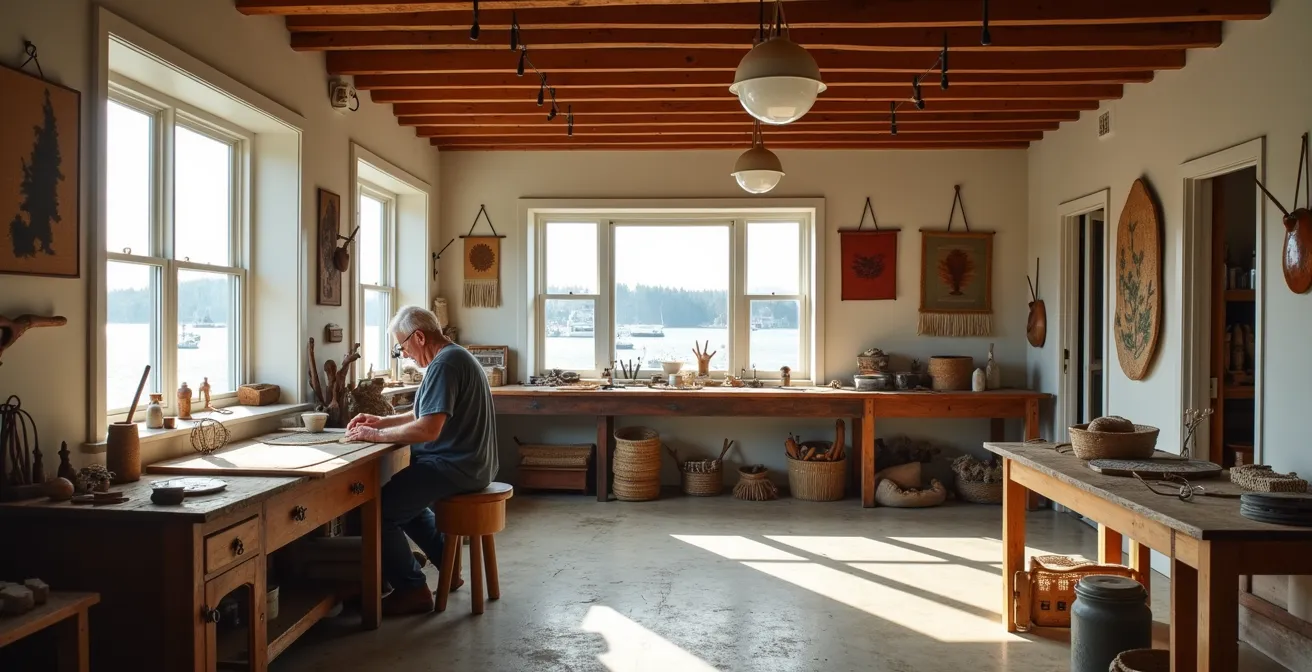
An authentic piece of maritime craft is a direct reflection of its environment. It uses local materials and is born from traditions passed down through generations. An imported souvenir, by contrast, is designed to simply evoke a generic sense of place. The first step is to seek out studios and galleries where the artist is physically present. If you can see the wood shavings on the floor or the loom in the corner, you’re in the right place. These are not just shops; they are workshops where the creative process is alive.
When examining an item, look for these markers of authenticity:
- Official Certification: Look for stamps or tags from official bodies like the Craft Nova Scotia or the Craft Council of Newfoundland and Labrador. These organizations jury their members to ensure quality and authenticity.
- Material Honesty: Does the piece reflect the local environment? Authentic carvings will use local wood species like spruce, pine, or birch. Hooked rugs in the Grenfell tradition are made with wool, not acrylic. Jewellery might feature beach glass and stones unique to the local geology.
- The Artist’s Story: Ask for an artist’s biography at the gallery. Is the artist from the region? Does their story connect with the place? A passionate gallery owner will be eager to share this information.
Choosing to buy a locally made item is more than a transaction. It’s a vote for the preservation of craft, a direct contribution to a local family, and the acquisition of a travel memento that has a soul.
The Diner Mistake: Why You Should Avoid Places with “Tourist Special” on the Menu
Nowhere is the line between authentic and tourist-oriented more blurred than in a village’s eateries. A sign advertising a “Tourist Special” or a “Captain’s Platter” is often a red flag, signalling a menu designed for visitor expectations rather than local tastes. The most memorable and genuine meals are rarely found in the places with the glossiest signs. Instead, they’re served in unassuming diners, church basements, and community halls where the focus is on feeding neighbours, not dazzling tourists.
The ultimate authentic dining experience is the community supper. These events—like Lobster Suppers, Fish Fries, or Bean Suppers hosted in community halls and church basements—are the heart and soul of village life. Here, you’ll eat alongside local families, fishermen, and seniors. The food is simple, hearty, and hyper-local. Finding them requires a little legwork; check with the local tourist information centre (the small, volunteer-run ones, not the big regional hubs) or look for handwritten signs tacked to telephone poles. This is dining as a communal act, not a commercial one.
When searching for a daily meal, train your eye to spot the signs of a truly local establishment. These diners are the unofficial community hubs, and they have a distinct character that is impossible to fake. They operate on the rhythm of the local workday, not the tourist schedule.
Your Checklist for Spotting a Genuinely Local Eatery
- Analyse the Parking Lot: Look for a parking lot full of pickup trucks and work vans, especially between 6-9 AM for breakfast and 12-1 PM for lunch. These are the vehicles of the working community.
- Inspect the Details: Check for mismatched coffee mugs, well-worn copies of the local newspaper available for reading, and handwritten daily specials on a whiteboard. These are signs of a place that values function over form.
- Listen to the Banter: Pay attention to the interactions. Do locals and staff call each other by their first names? A comfortable, familiar rapport is a clear indicator you’re in the right place.
- Decode the Menu: Seek out hyper-regional dishes that might be unfamiliar to outsiders, like Rappie Pie in Acadian Nova Scotia or Fish and Brewis in Newfoundland. Also, check the details: a seafood chowder served with a simple biscuit is often more authentic than one served with a generic bread roll.
- Follow the Local Schedule: A diner that closes by 3 PM is likely catering to the local workforce, not the dinner-seeking tourist crowd.
By choosing these places, you are not only getting a better, more authentic meal, but you are also participating in the daily life of the village and putting your money directly into the hands of a local family business.
When to Visit the Harbor to See the Fishing Fleet Unload the Catch?
Witnessing a fishing boat unload its catch is a powerful experience that connects you directly to the village’s purpose. However, this event doesn’t happen on a predictable tourist schedule; it’s governed by a complex interplay of tides, weather, and fishery regulations. To see this flurry of activity, you must learn to read the community rhythms of the harbour and use the right tools to anticipate the fleet’s return.
First, understand that different fisheries have strict opening and closing dates set by the Department of Fisheries and Oceans (DFO). These dates dictate the entire rhythm of the year. For example, the massive lobster fishery in LFA 34 (Southwestern Nova Scotia) is a winter endeavor, with the season opening on the last Monday of November. Arriving in July and expecting to see lobster boats unloading is a fundamental misunderstanding of the local cycle. The first step is to research the primary fishery of the village you’re visiting and its official season.
Beyond seasonal schedules, the daily return of the fleet is dictated by the tides. In regions with large tidal ranges like the Bay of Fundy, boats can only enter and leave small harbours during high tide. For day boats, this means they often leave early in the morning and aim to return in the mid-afternoon, typically between 2 PM and 4 PM, to catch the rising tide. The best source for this information is the harbormaster’s office or a quick check of the official tide tables from the Canadian Hydrographic Service (CHS).
To time your visit with precision, combine official sources with modern technology:
- Track the Fleet: Use apps like MarineTraffic or Vesselfinder. These allow you to see the real-time position of AIS-equipped fishing vessels, giving you a clear idea of when they are heading back to port.
- Check Official Sources: The DFO website lists opening and closing dates for all major commercial fisheries by region (e.g., Lobster Fishing Area or LFA).
- Follow Social Media: Local fishing association Facebook pages often post updates about fleet movements, especially around season openings or closures.
When you successfully time your visit to witness the unload, remember to stay out of the way. This is a fast-paced, industrial process. Observe from a safe distance, and appreciate the hard work that brings seafood from the ocean to the table.
How to Find an Authentic Screech-In Ceremony vs a Tourist Bar Version?
The “Screech-In” is perhaps Newfoundland’s most famous tradition for welcoming outsiders, or “Come From Aways.” However, its popularity has led to a proliferation of theatrical, tourist-bar versions that bear little resemblance to the genuine article. An authentic Screech-In is not a performance; it’s an act of spontaneous hospitality. It happens in a local’s kitchen or a small, crowded pub, led by someone who genuinely enjoys sharing their culture, not a staff member reciting a script for the tenth time that day.
The tourist version is easy to spot: it’s a ticketed event, often held on a stage with a microphone, designed for large tour groups to get a photo-op. The rum might be a generic dark spirit, and the “cod” might be a plastic toy. While amusing, it’s a scripted show. The authentic ceremony, as it originated in small outport communities with deep fishing roots, is chaotic, heartfelt, and intimate. It’s about being truly welcomed into the fold, sharing a glass of real Newfoundland Screech rum, and participating in a moment of genuine cultural exchange.
Discerning between the two requires looking for specific indicators that speak to the ceremony’s provenance and intent. An authentic experience is about community, while a tourist version is about commerce. The following table breaks down the key differences:
| Element | Authentic Ceremony | Tourist Version |
|---|---|---|
| Location | Kitchen, small local pub | Stage with microphone |
| Timing | Spontaneous, impromptu | Scheduled, ticketed |
| Leader | Local enjoying sharing culture | Staff reciting script |
| Rum | Real Newfoundland Screech | Generic dark rum |
| Atmosphere | Chaotic hospitality | Photo-op focused |
| Group Size | Small, intimate | Large tour groups |
Instead of seeking out a bar that advertises the ceremony, seek out a great local pub, strike up a conversation, and let the magic happen on its own terms. The real thing is worth the wait.
Charcuterie Board: Which Canadian Cured Meats Are Truly Artisanal?
While a traditional charcuterie board is a delight, in a Canadian fishing village, focusing solely on cured land meats misses the point. The true artisanal offering of the coast is what one might call a “seacuterie” board. This concept celebrates the local traditions of smoking, curing, and pickling seafood—methods born of necessity to preserve the catch long before refrigeration. A proper seacuterie board is a map of the region’s history and its specific fisheries, showcasing the unique flavours of the Canadian maritime provinces.
Assembling such a board, or finding a restaurant that serves one, is a lesson in local provenance. Each item tells a story. For example, the town of Digby, Nova Scotia, is world-famous for its scallops. During the annual Scallop Days festival, local fishermen and processors sell their products directly, ensuring you are getting an authentic taste of the Bay of Fundy. This is the principle to apply everywhere: look for products that are deeply tied to a specific place and its fishing heritage.
An authentic maritime seacuterie board is a celebration of local flavours. Look for these specific, artisanal items at local fishmongers, specialty shops, and farmers’ markets:
- Candied Salmon: A West Coast specialty, often sourced from BC fishing villages, where salmon is cured in a sweet brine and hot-smoked.
- Smoked Gaspé Salmon: Distinct from other smoked salmon, this Quebec product has a unique flavour profile from the cold waters of the St. Lawrence Gulf.
- Digby ‘Chicks’: Not chicken, but a traditional Nova Scotian delicacy of small, smoked herring.
- Bottled Mussels and Pickled Eel: Staples from Newfoundland and other Atlantic provinces, representing a long history of preserving shellfish and fish in brine.
- Accompaniments: Pair the seafood with traditional hard tack biscuits from a local bakery, artisanal cheeses from PEI or the Annapolis Valley, and preserves made from uniquely northern berries like bakeapples (cloudberries) or partridgeberries.
By seeking out these specific items, you are not just having a snack; you are tasting the history of a place, preserved in salt and smoke.
Key takeaways
- The most authentic experiences are found on the “working waterfront,” not the polished tourist promenade. Focus on the signs of daily labour.
- Respect is paramount. Learn and adapt to the community’s rhythms—the tides, the fishing seasons, the workday lulls—before you engage.
- Always question provenance. Whether it’s food, art, or a cultural ceremony, the authenticity lies in its local origins and the story behind it.
How to Read Tide Tables to Avoid Getting Trapped on the Mudflats?
In many Canadian fishing villages, especially around the Bay of Fundy, the tide is not just a gentle lapping of waves; it is the single most powerful force shaping daily life. It dictates when the fishing fleet can sail, when certain seafood can be harvested, and, most critically for visitors, when the ocean floor is safe to explore. Misunderstanding the sheer scale and speed of the tides can be extremely dangerous. The Bay of Fundy has the highest tides in the world, with a documented maximum range of 16.5 metres (54 feet) at Burntcoat Head, Nova Scotia. This means the water can rise vertically faster than you can walk horizontally.

Exploring the exposed ocean floor at low tide to see the “flowerpot rocks” or forage for clams is an incredible experience, but it requires diligent planning. The water does not rise at a steady rate. It follows the “Rule of Twelfths,” moving fastest in the third and fourth hours of the six-hour cycle. Getting engrossed in your exploration and losing track of time can lead to being cut off from shore by a rapidly incoming tide. Relying on a casual glance at the water level is not enough; you must use the official data.
Your essential tool is the official Canadian Hydrographic Service (CHS) Tide and Current Tables. Learning to use them is a non-negotiable safety skill for exploring these coastlines. Here is the essential process:
Essential Tide Safety Steps Using CHS Resources
- Get the Official Data: Download the correct volume of the CHS tide tables from charts.gc.ca. For the East Coast, this is Volume 1: Atlantic Coast and Bay of Fundy.
- Note Key Times: Identify the exact times for both high and low tide for your specific location, paying close attention to the time zone (AST or ADT).
- Plan Your Window: Never start exploring right at low tide. Give yourself a massive buffer. Plan to be on the mudflats for a maximum of three hours, centered around the time of low tide (e.g., 1.5 hours before and 1.5 hours after).
- Set a Hard Cutoff: Set a loud alarm on your phone for no later than two hours after the official low tide time. When it goes off, you must immediately start walking back to high ground, no exceptions.
- Check for Licenses: If you plan to forage for clams or other shellfish, check the provincial government website for required recreational harvesting licenses and any area closures due to contamination.
The tide is the lifeblood and the ultimate authority in these communities. By learning its language and respecting its power, you move from being a simple visitor to an informed and responsible traveller, able to safely access one of the world’s great natural wonders.