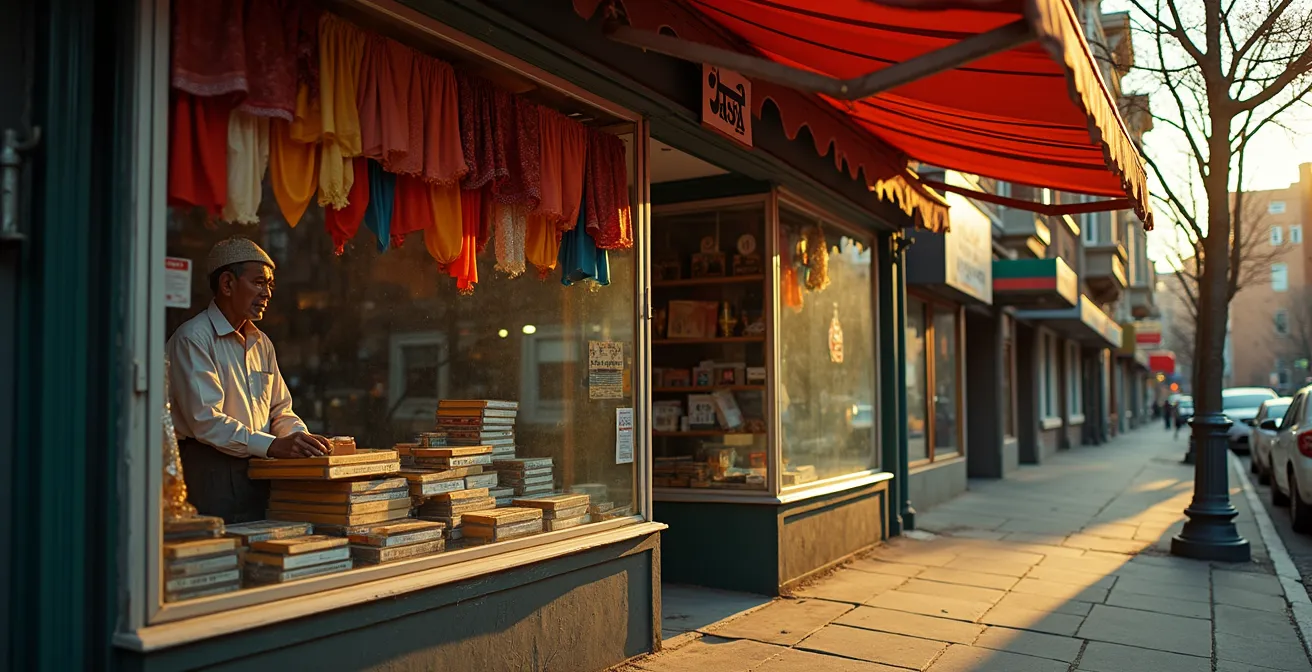
The real treasures of Toronto’s Little India aren’t on the main tourist trail; they are the fading sonic echoes of a specific golden age.
- The quest for 1990s Bollywood music is a race against the neighbourhood’s changing identity and the decline of physical media.
- True cultural connection comes from seeking specific “nostalgia-objects,” not generic souvenirs, which requires a deeper understanding of a neighbourhood’s story.
Recommendation: To truly explore a cultural neighbourhood, you must become a “cultural archaeologist,” looking for the stories behind the storefronts and understanding the forces that shape them.
Venturing into Toronto’s Gerrard India Bazaar, you might be looking for a vibrant sari, the scent of spices, or a plate of hot biryani. Most guides point you toward these sensory staples. But what if you’re searching for something more specific, a sound that defined a generation of the South Asian diaspora? What if you’re looking for the authentic pulse of 1990s Bollywood, captured on a cassette or CD? This quest is more than a shopping trip; it’s an act of cultural archaeology.
This isn’t about finding the latest hits on Spotify. It’s about uncovering tangible nostalgia-objects, the physical media that served as a lifeline to home for many newcomers in a pre-digital age. Is Little India in Toronto still worth visiting for these artifacts? Absolutely, but only if you know how and where to look. The challenge, as we’ll see, is that the very forces that make a neighbourhood a cultural hub—immigration, community building, and commerce—also make it vulnerable to change, gentrification, and the slow fading of its original character.
To succeed in this hunt, we must adopt the mindset of a hyper-local cultural historian. This means understanding that the authenticity of a neighbourhood isn’t a static exhibit. It lives in its specific products, like the precise tang of Sichuan pickles in Vancouver; it’s reflected in the resilience of communities like Montreal’s Parc-Ex; and it’s felt in the linguistic tapestry of a city’s many enclaves. This guide will equip you with that mindset, transforming you from a tourist into a true cultural explorer.
This article will guide you through the layered identities of Canada’s cultural neighbourhoods. We’ll explore the tangible signs of authenticity, from food to language to community hubs, helping you uncover the hidden gems that tell a deeper story.
Summary: A Cultural Explorer’s Guide to Canada’s Neighbourhoods
- Where to Buy Authentic Sichuan Pickled Vegetables in Vancouver’s Chinatown?
- Which Montreal ‘Quartier’ Still Retains its Original Cultural Character?
- How to Practice Intermediate Spanish in Toronto’s Little Portugal?
- The Sign That a Neighbourhood is Losing its Original Cultural Identity?
- Where Can Newcomers Find Free Legal Advice Specific to Their Country of Origin?
- The Transit Route That Connects Little Italy, Koreatown, and Greektown Quickly?
- The Souvenir Error: Buying “Inspired” Art That Has No Cultural Connection
- What is the Secret Ingredient That Makes Quebec Poutine Sauce Unique?
Where to Buy Authentic Sichuan Pickled Vegetables in Vancouver’s Chinatown?
The quest for authenticity often begins with flavour, and in Vancouver’s Chinatown, the search for true Sichuan pickled vegetables is a perfect example. These aren’t just sour vegetables; they are a cornerstone of Sichuan cuisine, providing a complex, funky, and spicy-sour base known as ‘suan cai’. To find the real deal, you must move past generic grocery stores and look for shops that cater to a knowledgeable clientele, often with packaging that is functional rather than flashy.
A prime example of this dedication to a single, authentic flavour is found just outside Chinatown in Richmond. Too Two Chinese Sauerkraut Fish is a one-dish specialist serving a massive hotpot of fish soup, `suan cai yu`. The “secret” is their house-made pickled mustard greens, which provide the dish’s signature tartness and funk. This dedication to a single, perfectly executed component is a key marker of authenticity. It’s not about offering a wide menu; it’s about mastering one essential taste.
When you’re in the shops, knowing the specific names is crucial. You’re not just asking for “pickles.” You’re looking for specific preparations. Ask for ‘Suimi Yacai’ (碎米芽菜), the pre-chopped preserved mustard greens essential for Dan Dan noodles. Or request ‘Sichuan zha cai’ (榨菜), the classic pickled mustard stem. These terms signal to the shopkeeper that you’re a serious cook, not a casual tourist, often unlocking access to higher quality, non-export versions of the products. Remember to rinse or soak them for about five minutes before use to control the saltiness.
This focused pursuit of a single ingredient is a microcosm of the larger quest for cultural connection—it requires knowledge, specific language, and an appreciation for the details that separate the genuine article from a pale imitation.
Which Montreal ‘Quartier’ Still Retains its Original Cultural Character?
In a city as dynamic as Montreal, the concept of “original cultural character” is a moving target. Many neighbourhoods have seen their identities shift due to gentrification. In fact, a 2021 report revealed that between 2% and 17% of Montreal’s population lived in gentrified areas by 2016. Amidst this change, one neighbourhood is frequently cited by locals as Montreal’s last truly authentic immigrant enclave: Parc-Extension, or “Parc-Ex.”
Historically a working-class neighbourhood, Parc-Ex has been a first stop for waves of newcomers for over a century. It welcomed Eastern Europeans and Jewish people after WWII, a large wave of Greek migrants, and in recent decades, has become the heart of Montreal’s South Asian community. The restaurants and grocers lining Jean Talon Boulevard are a testament to this enduring presence. Today, it’s also home to vibrant Haitian, Latino, and African communities, creating a dense, multicultural tapestry where longstanding networks of mutual aid and community support are a part of daily life.
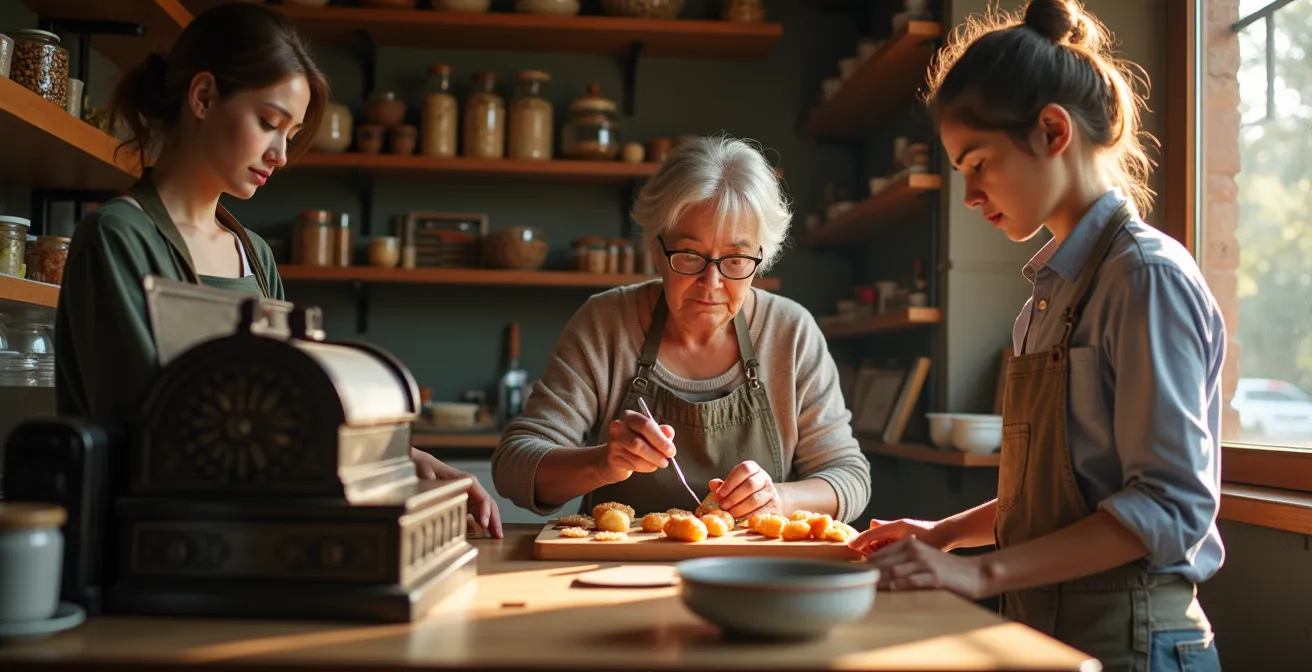
The character of Parc-Ex is not defined by trendy cafes or art galleries, but by family-run businesses, bustling markets, and places of worship that serve as community anchors. It’s in the sounds of multiple languages spoken on the street and the intergenerational knowledge passed down in shops and kitchens. While it faces its own pressures from gentrification, particularly with the development of the nearby University of Montreal campus, its spirit of a welcoming, migrant-first community remains its defining feature. It stands as a living example of how a neighbourhood’s identity can evolve with new cultures without losing its core character as a place of arrival and opportunity.
Parc-Ex provides a powerful lesson: a neighbourhood’s original character isn’t frozen in time but is a living, breathing entity continually enriched by the communities that call it home.
How to Practice Intermediate Spanish in Toronto’s Little Portugal?
This question holds a fascinating, counter-intuitive answer for the cultural explorer. While the name “Little Portugal” on Dundas Street West suggests a hub for Iberian languages, if your goal is to practice Spanish, you’re in the wrong place. The neighbourhood is a wonderful, vibrant centre for Portuguese culture, food, and language, but it is not a nucleus for Spanish speakers. This is a crucial lesson in cultural navigation: neighbourhood names can be historic signposts, not always reflections of the current linguistic reality.
The real opportunity to practice Spanish in Toronto lies in following the more recent waves of immigration. Data shows that South Americans from Brazil, Colombia, Venezuela, and Peru represent one of Toronto’s fastest-growing immigrant groups. These communities have formed vibrant hubs in different parts of the city. To find authentic Spanish conversation, you should redirect your journey to areas like St. Clair West (often called Corso Italia, but with a strong and growing Latin American presence) and the eclectic Kensington Market, which is filled with Latin American businesses, grocers, and restaurants.
For a truly immersive experience, seek out community events and organizations. The annual “Salsa on St. Clair” festival is a fantastic opportunity to be surrounded by the language and music. For more structured practice, joining a conversation group at the Centro Español de Toronto or even volunteering with newcomer services that support Spanish-speaking immigrants, like those offered by COSTI or the YMCA, can provide meaningful and authentic interactions. This approach—following the people, not just the signs—is the key to finding the living language you seek.
Practicing a language is about connecting with its speakers, and in a city as multicultural as Toronto, that often means exploring the neighbourhoods where new stories are currently being written.
The Sign That a Neighbourhood is Losing its Original Cultural Identity?
One of the most telling signs that a neighbourhood is losing its original cultural identity is the decline of its niche, specialty retail stores—the very places that once made it a destination. There is no better case study for this than the story of the music stores in Toronto’s Little India. In the 1990s, Gerrard Street East wasn’t just *a* place to get South Asian goods; for many in the Greater Toronto Area, it was the *only* place. Families made weekend pilgrimages for everything from food and fashion to the latest Bollywood films and music.
The music stores were central to this experience, serving as sonic community centres. They were the primary source for the 1990s Bollywood hits that formed the soundtrack to the diaspora experience. However, two major shifts began to erode this unique position. First, as the South Asian population grew and spread to suburbs like Scarborough, Mississauga, and Brampton, new stores opened there. These new locations offered cheaper rent for owners and greater convenience for customers, eliminating the need for the weekend trip to Gerrard Street.
Second, a generational shift occurred. The children of the original shop owners often chose to pursue other careers, showing little interest in taking over the family business. Simultaneously, the draw for the younger generation of customers changed. They had different tastes and consumed media differently, rendering the physical CDs and cassettes of their parents’ era into relics. The decline of these music stores is a powerful symbol: when a neighbourhood is no longer the exclusive provider of its unique cultural goods, and when the next generation moves on, its original identity begins to transform into something new—or fade away entirely.
So, when you see “For Lease” signs on the windows of shops that once sold specific, beloved cultural items, you are witnessing a neighbourhood’s identity in transition. This is the very reason the quest for 90s Bollywood music is so poignant—it’s a search for the last echoes of a bygone era.
Where Can Newcomers Find Free Legal Advice Specific to Their Country of Origin?
Navigating a new country involves more than just finding a community; it often requires grappling with a complex legal system. For newcomers in Canada, accessing free, culturally-sensitive legal advice is a critical need. The key is to look for services that are not only free but are also staffed by people who understand specific cultural and linguistic contexts. Fortunately, a robust network of such resources exists, particularly in cities like Toronto.
A powerful, often-overlooked first step is to contact the consulate of your country of origin. They frequently maintain lists of trusted, bilingual legal professionals who specialize in immigration and other common newcomer issues. Beyond official channels, community hubs are invaluable. Many places of worship, such as Gurdwaras in Brampton or Mosques in Mississauga, host regular pro-bono legal clinics as a form of community service. Similarly, dedicated cultural associations like the Hispanic Development Council or the Canadian-Polish Congress can connect members with legal experts from their own communities.

For more formal support, organizations like Legal Aid Ontario offer programs like the Immigration Detention Representation Program, and their referral service can filter lawyers by language and specialty. A prime example of grassroots support is the service offered by Access Alliance Multicultural Health and Community Services. They run free, monthly legal clinics for newcomers at AccessPoint on Danforth, providing help with permanent residence, sponsorship, and work permits, with interpretation services available on request. This shows that the most effective help often lies at the intersection of professional expertise and deep community trust.
Finding the right legal help is about finding a trusted voice in a new and unfamiliar landscape, a service that is essential for building a stable future in Canada.
The Transit Route That Connects Little Italy, Koreatown, and Greektown Quickly?
For the urban cultural explorer in Toronto, the most efficient tool is not a car, but a deep knowledge of the transit system. Connecting the city’s iconic cultural neighbourhoods of Little Italy, Koreatown, and Greektown quickly is surprisingly simple, as they are all conveniently strung along one of the city’s main arteries. The fastest and most direct route is the TTC’s Line 2 (Bloor-Danforth) subway.
This single subway line acts as a cultural conveyor belt. You can start your journey at Pape Station, which puts you a short walk from the heart of Greektown on the Danforth. After enjoying some saganaki or baklava, you can hop back on Line 2 and head westbound to Christie Station. Exiting here places you directly in Koreatown, ready to explore the shops and restaurants along Bloor Street West. Continue a few more stops west to Ossington Station, and a brief walk south will lead you to the bustling patios and trattorias of Little Italy on College Street.
While the subway is the quickest option, it’s not the only one. For those who prefer a more scenic, street-level experience, the 506 Carlton streetcar offers an excellent alternative. It travels a parallel path slightly to the south, directly connecting Little Italy and passing near Cabbagetown and other historic areas. The journey is slower but provides a much richer visual context of the city’s fabric. To make the most of your exploration, combining transit with the city’s Bike Share program is a great strategy, as there are docking stations near almost every subway stop.
To help you choose, here’s a quick comparison of the options, based on data from the official TTC route information.
| Route | Time | Experience | Best For |
|---|---|---|---|
| Line 2 Subway | 20 minutes total | Fast, underground | Quick commute |
| 506 Streetcar | 45 minutes total | Scenic, street-level | Explorers |
| Subway + Bike Share | 30 minutes active | Flexible, active | Fitness enthusiasts |
Mastering this simple transit route transforms a potentially complex trip into an easy and enjoyable multi-cultural journey through the heart of Toronto.
The Souvenir Error: Buying ‘Inspired’ Art That Has No Cultural Connection
One of the biggest mistakes a cultural explorer can make is falling for the “souvenir error”: purchasing an item that is merely “inspired” by a culture without having any genuine connection to it. These are the generic poutine-shaped keychains or mass-produced trinkets found in tourist traps. True cultural archaeology means seeking out items that hold authentic stories, were created by members of the community, or are genuinely used by the culture itself. It’s the difference between a symbol and a real object.
This is where our quest for 1990s Bollywood music fits in perfectly. A vintage CD or cassette from a small, family-run shop in Little India is not a reproduction; it is a direct artifact from the era. It’s an object with a history, a “nostalgia-object” that carries the weight of memory and experience. As local guide Marissa Anwar notes in a piece for Destination Toronto’s local guide, the neighbourhood’s deeper identity endures despite changes:
While things have changed elsewhere, the soul of Little India is still the same as it was when I first visited as a child. Bollywood hits from the 90s and early 2000s are still heard on the sidewalks.
– Marissa Anwar, Destination Toronto Local’s Guide
This “soul” is what we are looking for, and it resides in authentic objects. To avoid the souvenir error, you need a checklist—a way to audit an item’s authenticity before you buy. This ensures your money supports the actual community and that you’re taking home a piece of its real story.
Your Action Plan: Authenticity Checklist for Canadian Cultural Souvenirs
- Artist Verification: Check if the artist or creator is from the culture they are representing. Ask the shopkeeper directly.
- Official Marks: Look for official authenticity marks, like the “Igloo Tag” which guarantees a piece of Inuit art is genuine.
- Source of Purchase: Prioritize buying from community-run co-ops, artist studios, or specialty shops over generic, high-volume tourist stores.
- Functionality Test: Choose functional items the culture actually uses (e.g., real Quebec cheese curds, a hand-woven textile) over decorative items made for tourists.
- Vintage vs. Reproduction: For items like music or posters, actively seek out original vintage pressings from the era, such as 90s Bollywood CDs, instead of modern reproductions.
By following this checklist, you shift from being a passive consumer to an active supporter of cultural heritage, ensuring your keepsakes are as meaningful as your memories.
Key Takeaways
- True cultural authenticity is found in specifics—like 1990s Bollywood music or authentic Sichuan pickles—not in generic tourist experiences.
- Canada’s cultural neighbourhoods are dynamic ecosystems, constantly shaped by immigration, generational shifts, and the pressures of gentrification.
- Engaging with a culture means connecting with its living context, from understanding its transit systems and legal support networks to speaking its language.
What is the Secret Ingredient That Makes Quebec Poutine Sauce Unique?
After exploring the complex, shifting identities of Canada’s cultural neighbourhoods, it’s fitting to end on a question that seems simple but reveals a similar truth about authenticity. What is the secret ingredient in a real Quebec poutine sauce? The answer, much like the “soul” of a neighbourhood, is that there isn’t one single secret ingredient. The magic lies in a specific, carefully guarded combination and ratio.
Authentic ‘sauce brune’ is not just a basic gravy. It’s a “holy trinity” of broths, traditionally combining both beef and chicken broth to create a layered, savoury depth that can’t be achieved with one alone. The third key element is the thickener, typically cornstarch, which gives it that signature glossy, coating consistency. But the true distinction comes from an often-unmentioned spice blend. While recipes are secret, this blend commonly includes paprika, onion powder, and subtle hints of warming spices like clove or nutmeg, which separates it from Anglo-style gravy.
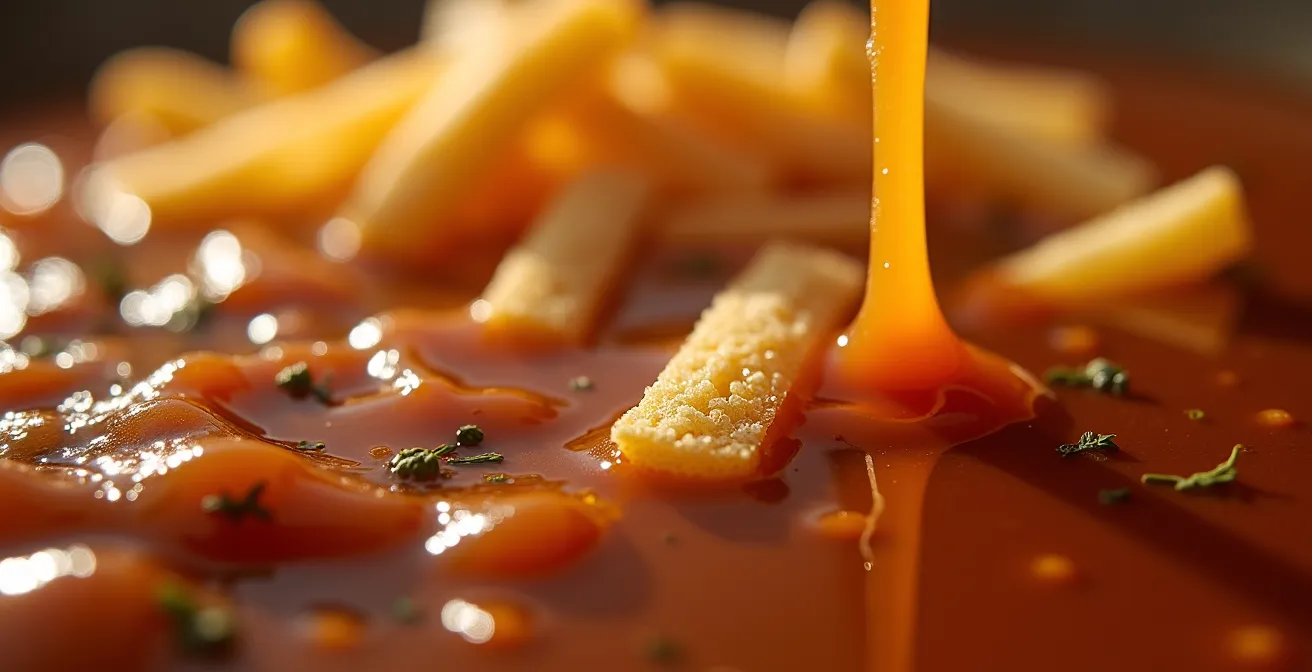
Furthermore, even within Quebec, regional variations exist. The poutine sauce in Montreal tends to be a darker, more beef-forward version, while Quebec City is known for a lighter, chicken-based ‘blonde’ sauce. The secret, therefore, is not an ingredient but a tradition of balance and regional nuance. It’s a formula, perfected over time, where each component plays a critical role. This is the perfect metaphor for a neighbourhood’s cultural character: it’s not one thing, but a delicate balance of people, history, commerce, and tradition that creates something unique and beloved.
Your mission as a cultural archaeologist is to go out and taste that unique combination for yourself. Don’t just visit a neighbourhood—investigate its ingredients, listen for its unique soundtrack, and seek the authentic stories that are waiting to be discovered just beneath the surface.