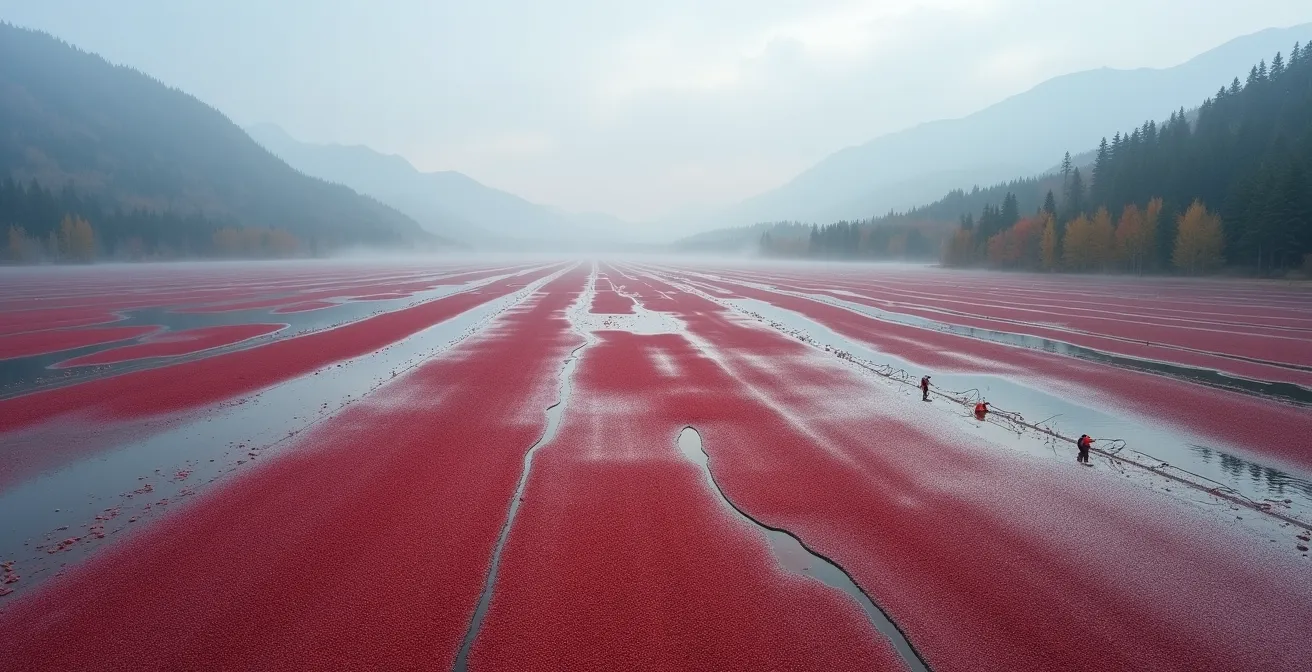
The secret to a memorable cranberry bog visit isn’t just finding the right farm; it’s understanding you’re a guest in a working food production facility.
- The iconic “floating berry” photo is only possible during the wet harvest, which is a specific, time-sensitive process.
- Strict rules about waders and access are in place to protect the farm’s biosecurity and your safety, not to limit your fun.
Recommendation: Always book a sanctioned farm tour experience. It’s the only way to get close to the action safely while respecting the crop and the people who grow it.
Every autumn, my social media feeds fill up with stunning images of vibrant red seas. Not oceans, but cranberry bogs, right here in British Columbia. I get it. The sight of millions of cranberries floating on the water is something special, and everyone wants that perfect photo, hip-deep in berries. As a cranberry farmer, I’m proud of that beauty. But I also see the misunderstandings that come with it. Many visitors, full of excitement, don’t realize that our farm isn’t a theme park; it’s a workplace, a delicate ecosystem, and our livelihood.
You might think visiting is as simple as showing up and putting on some boots. The truth is a bit more complex, but also far more rewarding. The real magic isn’t just in the photo; it’s in understanding the journey of that little berry from the vine to your table. It’s about respecting the immense effort that goes into the harvest. So, before you drive out to the Fraser Valley with your camera ready, let me share a farmer’s perspective. I want you to have an amazing, safe, and authentic experience. And that starts with knowing why we do things the way we do.
This guide will walk you through everything you need to know, from timing your visit perfectly to understanding the rules that keep both you and our crop safe. We’ll cover why our farm-gate berries taste so much better and even touch on other aspects of seasonal life here in BC, because our farms are part of a bigger, interconnected community.
Summary: How to Visit a Cranberry Bog During Harvest Without Disrupting the Farm?
- Mid-September or Late October: When is the Peak Cranberry Red in BC?
- Wet vs Dry Harvest: Which Method Offers the Iconic “Floating Berry” View?
- Why Buying Cranberries at the Farm Gate Tastes Different Than the Supermarket?
- The Wader Mistake: Why You Can’t Just Walk Into Any Flooded Bog?
- How to Process 10 lbs of Fresh Cranberries Before They Spoil?
- How to Safely Can Pickled Beets According to Modern Food Safety Standards?
- Why Visiting a Fishing Village in Winter Offers a Truer Glimpse of Daily Life?
- How to Avoid Vancouver Traffic When Driving the Sea-to-Sky Highway to Whistler?
Mid-September or Late October: When is the Peak Cranberry Red in BC?
Timing is everything. People often ask me for the single best day to visit, but the truth is our harvest is a moving target, dictated by weather and the berries themselves. The main harvest window is quite specific. Data shows that in Canada, 90% of cranberries are harvested between late September and October 31st. Here in British Columbia, that period is the heart of our season. The colour of the berries deepens as the nights get colder, so the “peak red” you’re looking for usually happens in October.
However, the harvest isn’t one continuous event. It happens in stages across different fields, or bogs. One field might be harvested on a Tuesday, drained by Thursday, and be nothing but green vines by the weekend. This is why you can’t just show up expecting a sea of red. The key is to plan ahead but stay flexible. Following local farms on social media or checking their websites is the best way to get real-time updates. The harvest window is tight, and our operations can change daily based on a sudden frost or a heavy rainfall.
Your Action Plan: Timing Your BC Cranberry Farm Visit
- Farm Websites Check: Start monitoring the websites and social media of farms like Riverside or Hopcott beginning mid-September. This is when they typically announce tour dates and farm store openings.
- Booking Window: Aim to book your visit between the last week of September and the second week of October. This is historically the sweet spot for seeing the floating berry harvest in action.
- Pre-Visit Confirmation: Call the farm a couple of days before your scheduled visit. A quick call to confirm the harvest stage can save you from disappointment, as weather dramatically affects our day-to-day work.
- Traffic & Travel: Factor in travel time. Farms in the Fraser Valley can be a significant drive from Vancouver, so plan your departure to avoid peak traffic.
- Be Prepared for Anything: Harvest happens rain or shine. Bring appropriate clothing for the weather, and remember that a rainy day on the farm has its own unique, beautiful atmosphere.
Wet vs Dry Harvest: Which Method Offers the Iconic “Floating Berry” View?
That incredible photo of a person standing in a floating sea of cranberries? It’s only possible because of a specific agricultural technique called wet harvesting. Many people think we grow cranberries in water, but the vines actually grow on dry land in sandy, peaty soil. We only flood the bogs for a brief period during the harvest. This is where the magic happens. Cranberries have four small air pockets inside them, which is why they float.
During a wet harvest, we flood the bog with about a foot of water. Then, we use machines called “eggbeaters” or water reels to churn the water, gently knocking the berries off the vines. Because they float, we can corral them together into a dense, colourful boom. This is the “sea of red” you’ve come to see. These berries are typically destined for processing into juices, sauces, and dried cranberries. It’s a highly efficient method that accounts for the vast majority of the harvest.
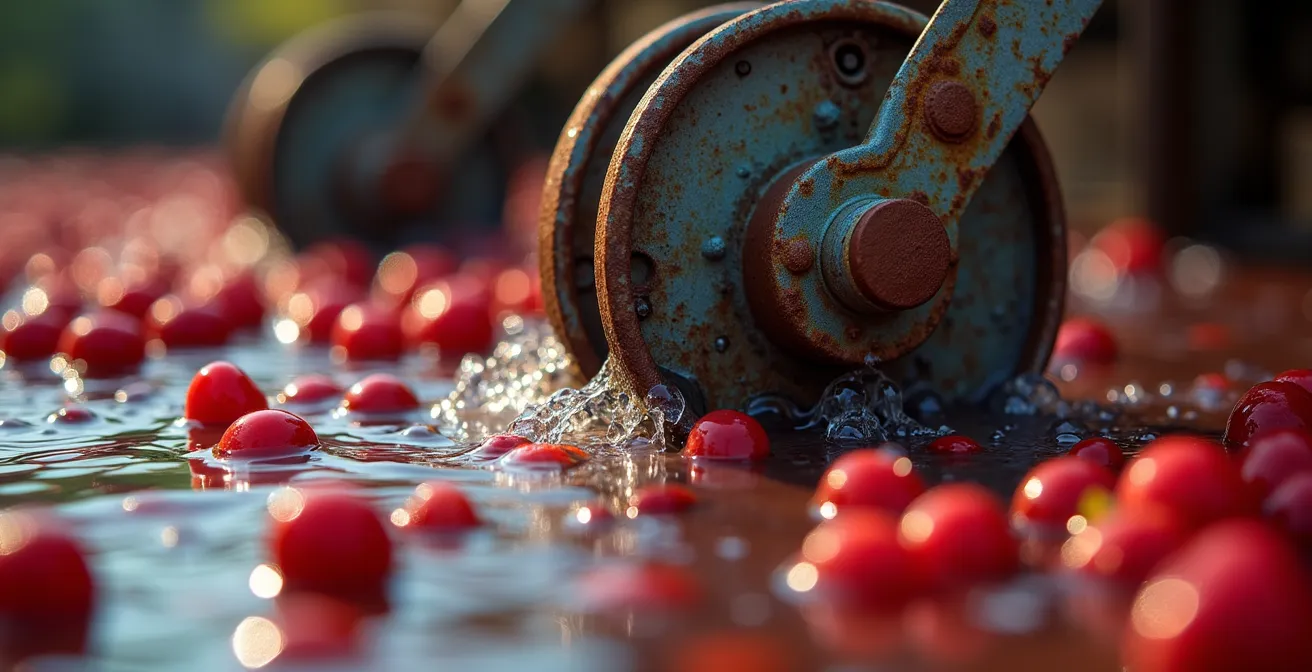
There’s another method, though: dry harvesting. For this, we use small, mechanical rakes that comb the berries off the vines without any water. It’s more labour-intensive and yields less fruit, but these are the premium berries you’ll find fresh in the clamshells at our farm store. They are the highest quality, handled with care to avoid bruising. So, when you’re planning your visit, remember that the iconic view is directly tied to the wet harvest method, a process designed for efficiency and scale.
Why Buying Cranberries at the Farm Gate Tastes Different Than the Supermarket?
A common question I hear in our farm shop is whether our fresh cranberries are really that different from the ones in a big grocery store. The answer is a resounding yes, and it comes down to a few key factors: variety, harvest method, and freshness. What you find at the supermarket is often a single, commercially dominant variety chosen for its durability and transportability. At the farm gate, we can offer several different cultivars, like Stevens or Early Black, each with its own unique size, colour, and flavour profile.
As Canadian Food Focus notes in their guide, it’s best to look for berries that are shiny, plump, and firm. They state:
Fresh cranberries are very tart and therefore rarely eaten raw. When buying fresh cranberries, look for berries that are shiny, plump and firm
– Canadian Food Focus, What’s in Season? Cranberries Guide
The berries we sell fresh are almost always dry-harvested, meaning they haven’t been soaking in water. This results in a firmer, more robust berry. The biggest difference, however, is time. A cranberry you buy from us might have been on the vine just 24 hours earlier. This is what we call “farm gate quality.” That minimal time from harvest to your hands means the berry’s natural sugars are at their peak, giving it a brighter, tangier profile before those sugars begin converting to starch during long-term storage and transport.
This table from a recent analysis by Canadian food experts breaks it down clearly.
| Aspect | Farm Gate Cranberries | Supermarket Cranberries |
|---|---|---|
| Varieties Available | Multiple cultivars (Stevens, Ben Lear, Early Black) | 1-2 commercial varieties |
| Harvest Method | Often dry-harvested for fresh market | Primarily wet-harvested |
| Time from Harvest | 0-3 days | 1-3 weeks |
| Sugar Content | Peak natural sugars, tangier profile | Some sugar-to-starch conversion occurred |
| Grade | Premium Grade A berries | Mixed grades |
| Storage Recommendation | Can freeze directly without washing | Wash before freezing |
The Wader Mistake: Why You Can’t Just Walk Into Any Flooded Bog?
This is the most important thing I can tell you: a cranberry bog is not a public swimming pool. The number one mistake visitors make is assuming they can bring their own waders and just walk into a field. Please, do not do this. The reasons are twofold: biosecurity and your safety. Our fields are a sensitive ecosystem. Outside footwear and waders can introduce invasive pests, fungi, or diseases that could devastate our crops. We work tirelessly to maintain the health of our vines, and protecting this “crop integrity” is our top priority. That’s why any farm offering a “cranberry plunge” experience will provide you with sanitized waders. It’s a non-negotiable rule.
Secondly, the floor of a bog is not a flat, even surface. It’s crisscrossed with hidden drainage ditches, irrigation lines, and uneven terrain where vines are thick. It’s incredibly easy to lose your footing, and falling in cold water while wearing waders can be dangerous. We know the layout of our fields, and when we offer a sanctioned experience, we do it in a controlled, supervised area that we know is safe for guests.
Case Study: Hopcott Farms Cranberry Plunge Protocol
To see how a safe experience is managed, look at Hopcott Farms in Pitt Meadows, BC. For their cranberry plunge, they have strict safety measures. They provide chest waders in specific sizes and enforce a minimum age of 10. Entry into the bog is via steady steps under direct staff supervision, and all participants must sign a liability waiver that acknowledges the inherent hazards of a working farm. This structured approach ensures guests have a fantastic, photo-worthy experience without compromising their safety or the farm’s biosecurity.
Respecting these rules is the ultimate sign of a thoughtful visitor. Look for farms like Hopcott, Riverside, or Muskoka Lakes (in Ontario) that offer official, supervised wader experiences. It’s the only way to get that amazing photo while ensuring the farm can continue to thrive for years to come.
How to Process 10 lbs of Fresh Cranberries Before They Spoil?
So you’ve had a wonderful visit and you’re heading home with a big bag of beautiful, farm-fresh cranberries. Now what? Fresh cranberries are hardy, but they won’t last forever in your fridge. The best way to preserve that peak “farm gate quality” is to freeze them, and there’s a right way to do it. The great news is that, according to Canadian storage guidelines, properly frozen cranberries can be kept for up to 3 years in sealed containers, giving you a taste of autumn all year long.
The key is to flash-freeze them. This prevents them from clumping into a giant red ice block. The most important first step is counterintuitive: do not rinse the berries before freezing. The natural, waxy coating on the cranberries helps protect them, and any extra moisture will cause them to stick together. Just pick out any stems or soft berries first.
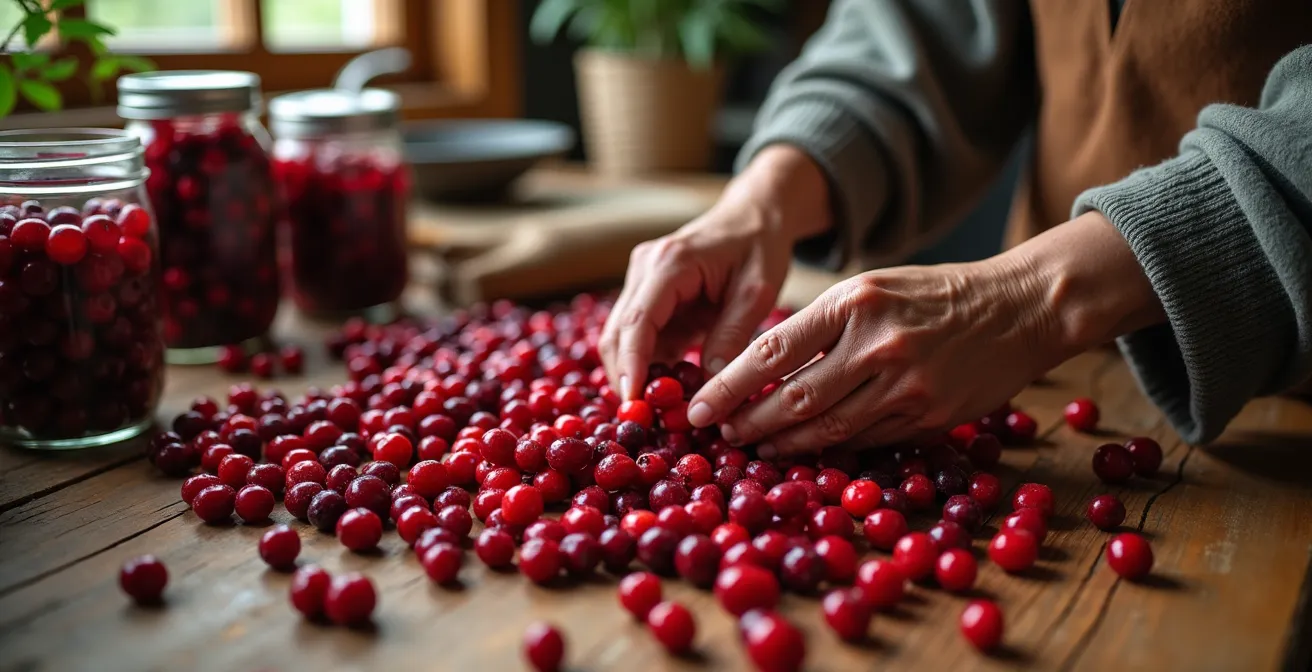
Once frozen solid, you can transfer them into airtight bags or containers. When you’re ready to use them in a recipe—for muffins, sauces, or a holiday compote—simply measure them out directly from the freezer. There’s no need to thaw them; in fact, thawing can make them mushy and compromise their texture in baked goods. By following this simple professional method, you can perfectly preserve the bounty of your farm visit.
How to Safely Can Pickled Beets According to Modern Food Safety Standards?
Life on the farm doesn’t stop when the cranberry harvest ends. Our kitchens get busy as we work to preserve the entire fall bounty. It’s a tradition rooted in practicality and a desire to enjoy the taste of the harvest through the long Canadian winter. Alongside cranberries, beets are a staple we put up every year. But canning, whether it’s beets or any other low-acid vegetable, requires the same level of respect for process and safety as we apply in our fields. Getting it wrong doesn’t just mean spoiled food; it can pose a serious health risk like botulism.
The number one rule in safe canning is controlling acidity. You must use a tested recipe from a reliable source that specifies the exact ratio of vinegar to vegetables and water. Guessing or reducing the vinegar to make it less tangy is a dangerous mistake. The goal is to achieve a pH level of 4.6 or lower, which is the scientifically proven threshold to prevent the growth of Clostridium botulinum spores. This isn’t just a recommendation; it’s a critical food safety standard recognized by Health Canada.
Another crucial factor many home canners in Canada overlook is altitude. Water boils at a lower temperature at higher elevations. This means you need to increase the processing time in your water bath canner to ensure the contents of the jar reach a safe temperature for long enough to kill off any harmful microorganisms. For example, in a city like Calgary, which is over 1,000 meters (or 3,000 feet) above sea level, you would need to add extra time to your recipe’s instructions. Always use an altitude chart for your specific location.
Why Visiting a Fishing Village in Winter Offers a Truer Glimpse of Daily Life?
The rhythm of our cranberry farm is dictated by the seasons—a quiet spring, a busy summer of growth, an intense autumn harvest, and a dormant winter. This cycle of work is a thread that connects us to other rural communities across British Columbia, especially our neighbours on the coast. Just as visitors flock to our bogs in October, tourists crowd coastal fishing villages in July and August. But if you want a truer glimpse of daily life, you have to visit in the off-season.
In winter, the charade of tourism fades away, and the authentic pulse of the community is revealed. You’ll see fishermen mending their nets in the cold, boats pulled up for repair, and the steady, unglamorous work that sustains the village year-round. The local cafes are filled with residents, not tourists, and the conversations are about weather patterns and catch reports, not souvenir shops. It’s in these quiet moments you connect with the place on a deeper level.
This is true across Canada. As one observer noted about the famous Peggy’s Cove on the East Coast during the off-season, and it holds just as true for BC villages like Steveston or Ucluelet:
Winter visitors to Peggy’s Cove witness the authentic maritime life – fishermen mending nets, boats under repair, and locals gathering at the community center rather than catering to summer crowds. The village’s 35 permanent residents appreciate respectful winter tourists who engage with the working waterfront reality.
– Destination Canada
Visiting in the winter requires a different mindset. It’s not about consumption; it’s about observation and respect. It’s for the traveler who understands that the real soul of a place isn’t in what’s for sale, but in the daily lives of the people who call it home, especially when the crowds have gone.
Key Takeaways
- Plan your visit between late September and mid-October for the best chance to see the wet harvest, but always check farm websites for real-time updates.
- Never enter a bog without being part of a sanctioned, supervised farm tour. This is for your safety and the farm’s biosecurity.
- The “sea of red” is a specific part of the wet harvest process; berries for the fresh market are dry-harvested and look different.
How to Avoid Vancouver Traffic When Driving the Sea-to-Sky Highway to Whistler?
As a farmer, I know a thing or two about planning around forces you can’t control—weather for me, and for anyone travelling in the Lower Mainland, it’s traffic. Getting to our farm in the Fraser Valley from Vancouver requires a bit of strategy, and the same is true if your BC autumn adventure includes a trip up the stunning Sea-to-Sky Highway to Whistler. The beauty of that drive can be quickly soured by sitting in bumper-to-bumper gridlock.
The key, just like with our harvest, is timing. The exodus from the city is predictable. According to local traffic data, you’re facing a significant spike in congestion on the way to Whistler on Friday afternoons. In fact, DriveBC traffic data shows Friday afternoons see 40% higher traffic volume between 2 PM and 7 PM. The return journey is just as predictable, with the main clog happening on Sunday afternoons as everyone heads back to the city.
So, what’s the local strategy? Leave early or leave late. If you’re heading north on a Friday, aim to be past North Vancouver before 2 PM or wait until after 8 PM. For the return trip on a Sunday, your best bet is to leave Whistler before 10 AM or enjoy dinner there and hit the road after 7 PM. If you do get caught, don’t just sit and fume. Use it as an opportunity. Pull over at Porteau Cove Provincial Park for a beautiful walk along the water, or plan a stop at the Britannia Mine Museum. A 60-minute break can be enough for the worst of the congestion to dissipate, turning a frustrating delay into a memorable part of your journey.
Frequently Asked Questions About Farm-Fresh Preserving
What pH level is required to prevent botulism in pickled beets?
Health Canada requires a pH of 4.6 or lower for all home-canned foods to prevent botulism growth. Use only tested recipes with proper vinegar ratios.
How do altitude changes affect processing times in Canada?
Add 5 minutes for locations 1,001-3,000 feet above sea level (like Calgary), and 10 minutes for 3,001-6,000 feet elevation.
What are the critical signs of spoilage to watch for?
Discard immediately if you notice bulging lids, spurting liquid when opened, off-odors, cloudiness, or mold – never taste suspicious food.