
True safety for a solo female traveler in Canada isn’t just a statistic; it’s a skill you build by creating a ‘scaffolding of confidence’ around your journey.
- Move beyond generic safety ratings by using real-time local data to inform your decisions.
- Combat loneliness strategically by choosing accommodations that act as ‘cultural brokers,’ like Quebec’s certified Gîtes.
- Embrace ‘calculated spontaneity’ over rigid itineraries to open yourself up to genuine self-discovery.
Recommendation: Approach your trip not as a simple vacation, but as an active project in self-empowerment, where each choice reinforces your confidence and deepens your experience.
The idea of a solo trip to Canada often sparks a powerful mix of excitement and apprehension. For a woman traveling alone for the first time, the allure of vast, stunning landscapes and vibrant, multicultural cities is often tempered by a single, crucial question: “Is it safe?” The standard answers—that Canada consistently ranks as one of the world’s safest countries and that you should simply “use common sense”—are both true and profoundly unhelpful. They offer reassurance but provide no real strategy for the ambitious traveler who seeks not just safety, but transformation.
This kind of surface-level advice misses the point. It frames safety as a passive state of avoiding danger rather than an active skill that unlocks deeper experiences. The real goal isn’t just to return home unharmed; it’s to engage with a new environment so confidently that you create space for personal growth, meaningful connections, and the kind of self-discovery that only solo travel can offer. But what if the key to this wasn’t about building higher walls, but about constructing a smarter foundation?
This guide reframes the conversation. We will move beyond the platitudes to build a practical framework, a ‘scaffolding of confidence’ for your journey. We’ll explore how to interpret safety data like an expert, choose accommodations that cure loneliness, adopt a travel style that fosters discovery, and navigate the subtle cultural nuances that turn a tourist into a traveler. This is your blueprint for a trip that is not only safe but truly empowering.
To navigate this comprehensive approach, this guide is structured to walk you through each layer of building your travel confidence, from data-driven realities to the art of social connection.
Summary: Your Roadmap to a Safe and Empowering Canadian Solo Trip
- Perception vs Reality: How Safe Are Canadian Cities at Night?
- Hostel vs Airbnb: Which Accommodation Cures Solo Travel Loneliness Faster?
- Why Over-Planning Your Route Kills the Potential for Self-Discovery?
- The “Check-In” System: How to Keep Family Updated Without Being Tethered?
- Bus or Train: Which Mode of Transport is Safer for Solo Women?
- Why Staying in a Gîte (B&B) is Better Than a Hotel for Meeting Locals?
- How Does the Ontario Line Subway Construction Affect North-South Pedestrian Flow?
- What are the Biggest Cultural Faux Pas for a New Immigrant in a Small Canadian Town?
Perception vs Reality: How Safe Are Canadian Cities at Night?
The first step in building your scaffolding of confidence is to replace vague fears with concrete data. While Canada enjoys a reputation for safety, this broad-stroke image doesn’t help you decide whether to walk back to your hotel after dinner in downtown Toronto or Montreal. The reality is that safety is hyperlocal and dynamic. Fortunately, official data provides a much clearer picture than generalized perceptions. For instance, Statistics Canada’s latest report indicates the national Crime Severity Index was 77.9 in 2024, showing a steady trend that allows for informed, not fearful, planning.
However, national statistics are only a starting point. True empowerment comes from knowing how to access real-time, neighborhood-specific information. Major Canadian cities are increasingly transparent with their data, offering tools that let you see what’s happening on the ground. Instead of relying on anecdotal advice, you can use official police portals to check patterns in the specific areas you plan to visit. This proactive approach transforms you from a passive tourist into an informed urban navigator, capable of making decisions based on facts, not fear. It answers the question, “Is this street safe *tonight*?”
This data-driven mindset is the foundation of smart solo travel. It allows you to confidently explore vibrant nightlife or enjoy an evening stroll, knowing you’ve done your due diligence. It’s not about avoiding cities after dark; it’s about knowing *how* and *where* to enjoy them safely. By leveraging these tools, you build the first, most crucial layer of your confidence framework.
Action Plan: Verifying Real-Time City Safety
- Access Public Data Portals: Before or during your stay, visit the local police service’s public safety data portal, like the one for Toronto, to view interactive crime maps.
- Filter for Relevance: Use the portal’s tools to filter incidents by type, date, and specific location to understand the context of a neighborhood.
- Locate Support Services: Use community asset portals, often linked from police websites, to identify the locations of shelters and official support centers in your area.
- Analyze Historical Patterns: If available, download historical data to understand long-term safety trends in neighborhoods you’re considering for accommodation.
- Enable Location-Based Alerts: Check for official city or police apps that offer real-time safety alerts for your immediate vicinity.
Hostel vs Airbnb: Which Accommodation Cures Solo Travel Loneliness Faster?
After establishing a foundation of physical safety, the next layer of your scaffolding addresses emotional well-being: connection. For many solo travelers, the fear of loneliness is as potent as the fear of crime. The choice of accommodation is your single most powerful tool for shaping your social experience. While hostels are the default recommendation for meeting people, they offer a specific, often youth-oriented, type of social interaction. An Airbnb private room provides local immersion but can be isolating. The key is to match the environment to your desired outcome.
A comprehensive study on solo female travelers in Canada highlights a powerful alternative: provincially certified Gîtes (B&Bs), particularly in Quebec. These establishments reported the highest levels of social connection and cultural immersion. The secret lies in their structure; the shared breakfast table, for example, becomes a low-pressure, daily ritual for connecting with both a local host and other travelers. The host often acts as a ‘cultural broker,’ offering warm introductions and insights that you wouldn’t get from a hotel concierge or a busy hostel front desk. This curated social environment directly and effectively combats feelings of isolation.
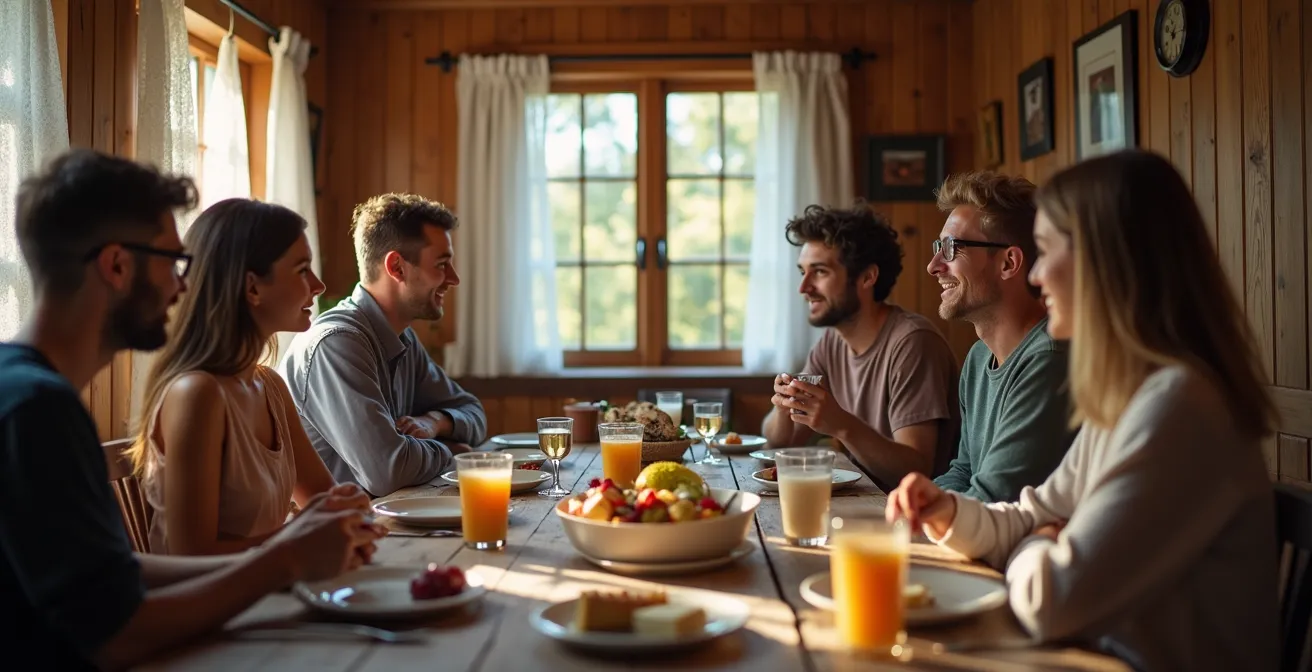
As the image suggests, the right setting can foster genuine conversation and camaraderie. Choosing your accommodation is not just about finding a place to sleep; it’s about designing your social ecosystem. To make an informed choice, you must weigh the safety features, social opportunities, and costs of each option against your personal goals for the trip.
The following table, based on a comparative analysis of Canadian accommodations, provides a clear framework for this decision.
| Accommodation Type | Safety Features | Social Opportunities | Cost Range (CAD/night) |
|---|---|---|---|
| HI Canada Hostels | 24/7 staff, secure lockers, women-only dorms | Common areas, organized activities, shared kitchens | $35-60 |
| University Residences (Summer) | Campus security, supervised buildings, card access | Student lounges, dining halls, campus events | $45-80 |
| Private Room in Host’s Home (Airbnb) | Verified hosts, local presence, residential neighborhoods | Host interaction, local insights, home environment | $60-120 |
| Quebec Certified Gîtes | Provincial certification, quality standards, host accountability | Shared breakfast, cultural brokering, warm introductions | $80-150 |
Why Over-Planning Your Route Kills the Potential for Self-Discovery?
With safety and social foundations in place, you can now address the core of a growth-oriented journey: self-discovery. This is where a counter-intuitive approach becomes essential. The common advice to “plan your itinerary carefully” can, if taken to an extreme, become the biggest obstacle to transformation. A minute-by-minute schedule leaves no room for serendipity, for the unexpected detours, conversations, or moments of quiet reflection where true growth happens. It turns a journey of discovery into a checklist of photo-ops.
Embracing calculated spontaneity is the key. This doesn’t mean arriving in a new country with no plan at all. Instead, it means adopting a more flexible “hub and spoke” strategy. As travel writer Rachel Elizabeth notes on the Blond Wayfarer blog, this approach is perfectly suited to Canada’s immense scale. She advises, “Canada’s vast geography is a practical argument for spontaneity. Setting up a base in a city like Halifax or Calgary for a few days and using it for spontaneous day trips to surrounding areas is more manageable than a rigid cross-country itinerary.” This strategy provides the security of a home base while maximizing freedom.
This approach allows you to respond to local advice, changing weather, or your own shifting moods. You might hear about a local music festival, a stunning hiking trail not in your guidebook, or simply decide to spend an afternoon reading in a park. These are the unplanned moments that often become the most cherished memories and the most potent catalysts for self-reflection. The goal is to build a loose framework that supports, rather than restricts, your journey.
- Choose a Central Hub: Select a city with good transport links and a variety of nearby attractions, such as Montreal, Calgary, or Halifax.
- Establish a Base: Book accommodation for a minimum of 3-4 nights to settle in and create a sense of stability.
- Research, Don’t Pre-Book: Identify potential day trips and activities but resist the urge to book them all in advance.
- Engage with Local Opportunities: Be open to last-minute activities, like joining a community hike in a provincial park or attending a “kitchen party” in the Maritimes.
- Seek Daily Advice: Ask your host or locals for recommendations each morning based on current conditions and events.
- Keep a Blank Day: Intentionally leave at least one day in each hub completely unplanned for pure, serendipitous discovery.
The “Check-In” System: How to Keep Family Updated Without Being Tethered?
A critical piece of the confidence scaffolding involves managing communications with loved ones back home. The need to reassure family and friends is real, but a rigid “check-in” schedule can feel like a tether, pulling you out of the present moment and reinforcing a sense of being monitored rather than free. The challenge is to create a system that provides peace of mind for them and freedom for you. This requires a strategy that is both reliable and unobtrusive, especially in a country like Canada where connectivity can’t be taken for granted. It’s a sobering fact that over 20% of Canada’s landmass has no cellular coverage, a reality that must be factored into any communication plan.
This is where you can shift from a “check-in” chore to a practice of creating digital breadcrumbs. As detailed in a case study of solo traveler safety strategies, this can be a creative and empowering process. One effective low-tech method is casually informing your hotel or Gîte host of your general plans for the day under the guise of asking for tips. This creates a simple, local-level safety net. On the digital side, instead of mandatory texts, consider using a shared Google Doc or a private blog as a travel journal. Updating it becomes a meaningful ritual of reflection for you and an engaging, non-intrusive update for your family.
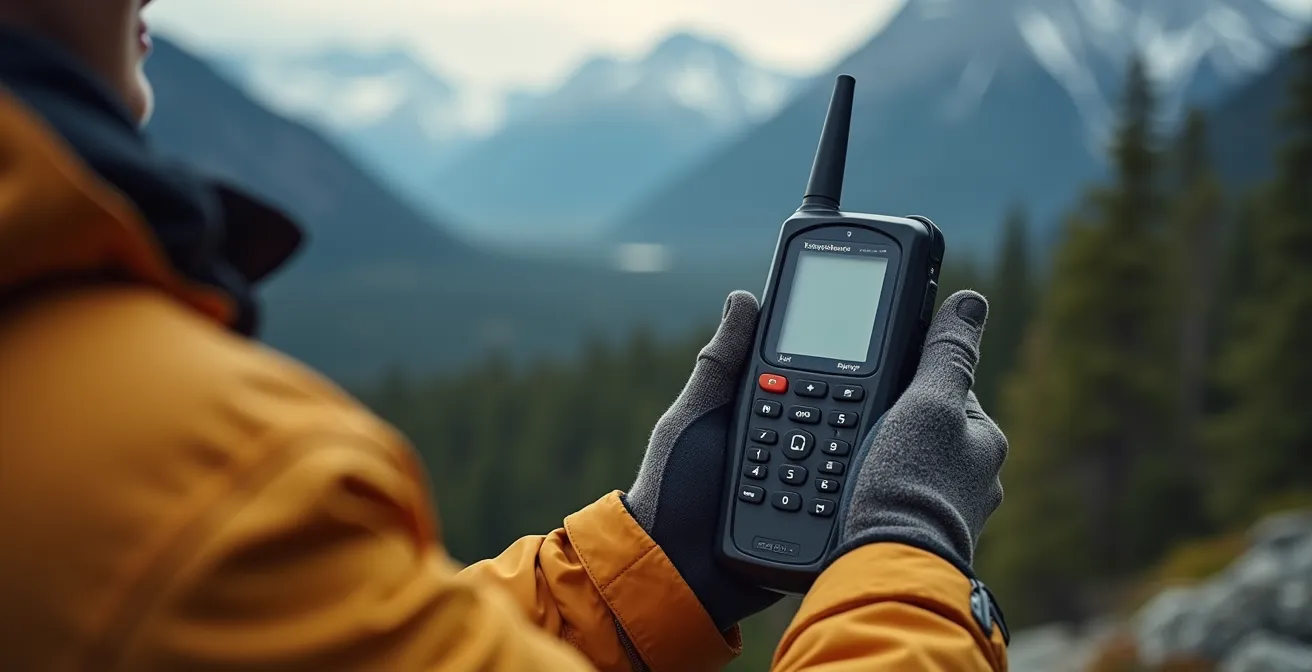
For adventures into Canada’s vast wilderness where cell service is non-existent, a more robust tool like a satellite communicator becomes essential. This device, once reserved for extreme expeditions, is now a practical part of a solo traveler’s safety kit, allowing for pre-set “I’m okay” messages or emergency SOS calls. Having this backup transforms a potentially anxious experience into a confident exploration of remote beauty. It’s the ultimate expression of taking full responsibility for your own safety, providing you and your family with the highest level of reassurance.
Bus or Train: Which Mode of Transport is Safer for Solo Women?
Your mobility choices are another pillar of your confidence scaffolding. How you move between Canada’s cities and towns impacts not only your budget and schedule but also your sense of security and comfort. The two primary options for long-distance ground travel, bus and train, offer vastly different experiences for a solo female traveler. While bus services like Megabus can be cost-effective, they often involve terminals in less central locations and a more isolated travel experience with only a driver as staff.
In contrast, train travel, primarily with VIA Rail in Canada, presents a more structured and secure environment. Major train stations like Toronto’s Union Station are bustling hubs integrated into city centers with a significant staff and security presence. Onboard, the continuous presence of conductors and service staff provides a constant point of contact. Furthermore, the option of booking a private ‘Sleeper Plus’ cabin on longer routes offers a lockable, personal space—a significant feature for peace of mind. The social spaces on a train, like dining or dome cars, also provide opportunities for safe and comfortable interaction with fellow passengers, turning a simple transit day into a pleasant part of the journey.
Recent data further reinforces the safety advantages of rail. A 2024 report on Canadian rail trends highlighted significant safety improvements, making the choice clearer for those prioritizing security.
| Safety Factor | VIA Rail | Bus Services (e.g., Megabus) |
|---|---|---|
| Accident Rate Improvement (2023) | 52.4% reduction in passenger train accidents | Data not specified |
| 24/7 Staff Presence | Yes – conductors and service staff throughout journey | Driver only, limited interaction |
| Terminal Security | Major stations with integrated services | Often isolated depots with minimal security |
| Private Cabin Options | Sleeper Plus cabins with lockable doors | No private space available |
| Social Spaces | Dining cars and dome cars for safe interactions | Limited to seat area only |
Why Staying in a Gîte (B&B) is Better Than a Hotel for Meeting Locals?
While a hotel offers anonymity and standardized comfort, it is fundamentally a transient space. For the solo traveler seeking genuine connection and cultural immersion, a hotel is often a barrier to the local community, not a bridge. In contrast, the Gîte (or certified B&B), especially within Quebec’s well-regulated system, is designed for connection. It is not just accommodation; it’s a curated entry point into local life, offering a warmth and personalization that a corporate hotel chain cannot replicate.
The host is the central figure in this dynamic. They are more than a proprietor; they are a cultural broker. They provide the context behind the sights, explain subtle social norms, and offer personal introductions to people and places you would never find on your own. This transforms the experience from passive observation to active participation. The structure of a Gîte, particularly the shared breakfast, is intentionally designed to foster these connections in a natural, low-pressure setting. It’s an incubator for spontaneous plans and shared stories.
This sentiment is powerfully captured by the experience of one solo traveler in Quebec, who found the Gîte to be the defining element of her trip:
My secret little pleasure: strolling through Old Quebec in the early morning, when the cobblestone streets still echo with night’s silence. But what made the difference was my Gîte host – she didn’t just provide a room but acted as my personal cultural broker, offering warm introductions to locals and explaining subtle social norms I would have never understood alone. The shared breakfast became my daily highlight for genuine connections.
– Solo Traveler, as quoted in Nomad Sister
Choosing a Gîte is a strategic decision to prioritize human connection over sterile convenience. It’s an investment in the ‘why’ of your travel—to understand a place through its people—and is a cornerstone of building a trip that is not just memorable, but truly transformative.
How Does the Ontario Line Subway Construction Affect North-South Pedestrian Flow?
Engaging with a city on a deeper level means understanding its current evolution, including its challenges. In Toronto, the massive Ontario Line subway construction is a prime example. For a visitor, this isn’t just an inconvenience; it’s a real-time urban geography lesson that affects everything from noise levels to, most importantly, pedestrian safety and flow. Major north-south arteries are disrupted, forcing pedestrians onto unfamiliar, often narrower, and poorly lit detours. For a solo traveler, navigating these changing landscapes requires a higher level of situational awareness.
Treating this not as a nuisance but as a “living case study in urban evolution” is a mindset shift that aligns with a growth-oriented journey. It means being proactive in your route planning and leveraging city resources to navigate safely. The construction zones are a practical test of the skills you’ve been building: accessing real-time data, prioritizing well-lit routes, and maintaining a heightened sense of your surroundings. Successfully navigating this complex environment is a significant confidence boost.
Rather than avoiding these areas, a confident traveler learns to master them with the right strategies. This demonstrates a level of engagement with the city that goes far beyond typical tourism. Here are some expert strategies for safe navigation during this period of transition:
- Use Toronto’s underground PATH system as a weather-protected and well-lit alternative to street-level detours.
- Favor walking along major thoroughfares like University Avenue, which offer wider sidewalks and better lighting than adjacent streets impacted by construction.
- Check the Toronto Police Public Safety Data Portal for any updated pedestrian incident reports near construction zones.
- Download the city’s official construction update or transit app for real-time information on closures and detours.
- Whenever possible, plan your first walk through a heavily affected area during daylight hours to familiarize yourself with the layout.
Key Takeaways
- True travel safety is built on a foundation of verifiable, local data, not on generalized perceptions or fear.
- Your choice of accommodation is a primary tool for building a social support system and combating loneliness, with options like Gîtes offering unique benefits.
- Embracing calculated spontaneity through strategies like the ‘hub and spoke’ model is essential for creating opportunities for genuine self-discovery.
What are the Biggest Cultural Faux Pas for a New Immigrant in a Small Canadian Town?
The final, and perhaps most nuanced, layer of your confidence scaffolding is cultural competence. This is especially true when venturing beyond Canada’s diverse urban centers into its smaller towns, where social codes can be more subtle and close-knit. What is considered polite in a bustling city can be perceived as rude in a small-town setting, and understanding these differences is key to making the genuine connections you seek. This is less about avoiding offense and more about demonstrating respect and an eagerness to engage authentically.
One of the most critical social lubricants, as identified by research in Canadian cultural studies, is the practice of engaging in brief, friendly small talk before making a request. In many small-town shops, cafes, or post offices, launching directly into your transaction without a “How’s it going?” or a comment on the weather can be seen as abrupt and discourteous. Another key institution to understand is Tim Hortons. It is far more than a coffee shop; it is the de facto community hub, the town square where locals gather. Simply sitting and observing, or striking up a light conversation, is one of the fastest ways to integrate into the local rhythm.

Furthermore, an awareness of local context, such as proximity to First Nations reserves, is crucial. Taking a moment to understand the practice of land acknowledgements and the difference between cultural appreciation and appropriation shows a profound level of respect. Mastering these small but significant social rituals is the capstone of your journey. It demonstrates that you are not just a visitor passing through, but a traveler who is present, observant, and respectful of the community you are in.
Now that you have the complete framework—from data-driven safety to cultural fluency—the next step is to begin building your own journey of growth. Start by researching a Canadian “hub city” that sparks your curiosity and use these principles to plan an adventure that is not just safe, but truly and unforgettably yours.
Frequently Asked Questions About a Solo Trip to Canada
What makes Quebec’s Gîte certification different from regular B&Bs?
Quebec’s provincial certification system requires specific quality standards, safety protocols, and cultural integration training that generic B&Bs don’t require, providing extra trust and quality assurance for solo travelers.
How does the shared breakfast facilitate connections for solo travelers?
The breakfast table serves as a low-pressure, built-in daily opportunity to connect with both the local host and other travelers, share stories, and make spontaneous plans for the day.
What role does the Gîte host play beyond accommodation?
Hosts act as cultural brokers, providing personal guides to the local scene, warm introductions to community members, and explanations of subtle social norms that facilitate genuine connections.