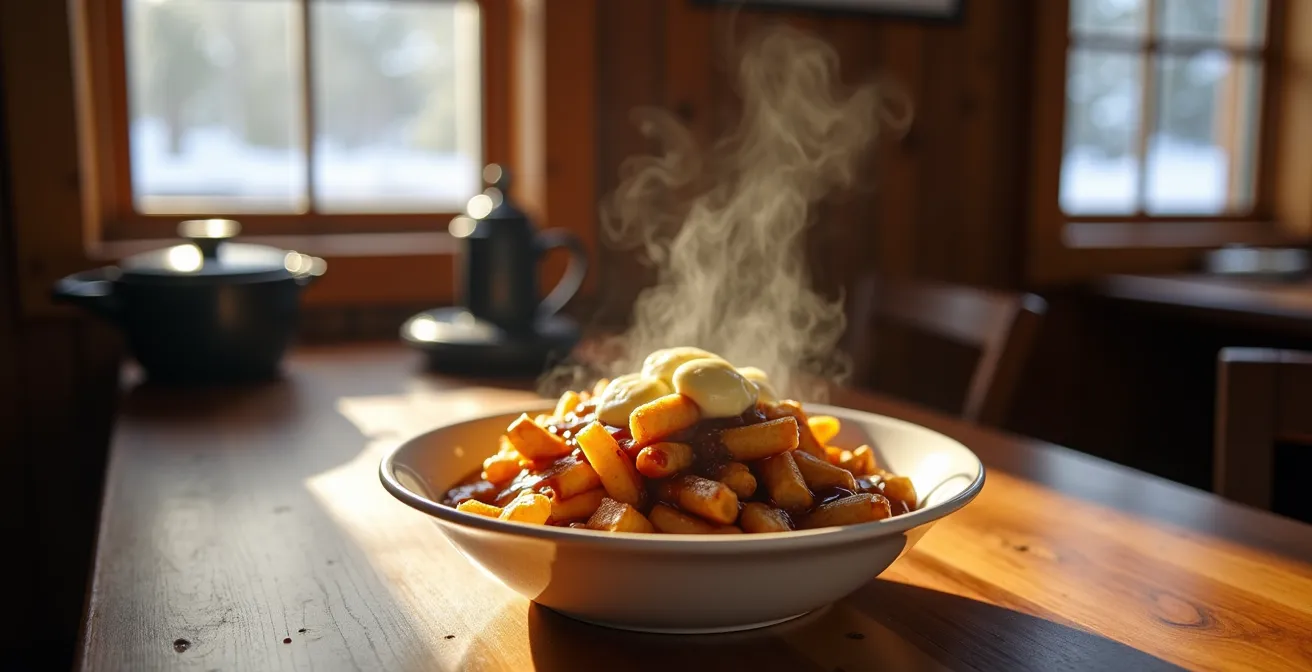
The real secret to authentic Quebec poutine sauce is not the type of broth, but a forgotten culinary principle of balancing flavours.
- It’s about achieving a specific sweet-acidic balance (l’équilibre aigre-doux), often using heritage pantry staples like pickled beet juice or fruit ketchup.
- This flavour depth is what distinguishes complex, traditional recipes from modern, simplified versions that often fall flat.
Recommendation: To replicate the true taste, you must think less like a recipe-follower and more like a culinary historian, understanding the unique *terroir culinaire* of Quebec.
For any food lover who has tried to replicate Quebec’s iconic poutine at home, a familiar frustration often arises. You’ve sourced the freshest, squeakiest cheese curds. Your fries are perfectly double-fried to a golden crisp. Yet, the sauce—the very soul of the dish—somehow misses the mark. It lacks that certain *je ne sais quoi*, that depth and character that defines an authentic poutine from *la belle province*. Most online recipes will point you towards a predictable combination of beef and chicken broth, thickened with cornstarch, and perhaps seasoned with pepper and onion powder. While these are components, they are merely the opening notes of a much more complex symphony.
These common recipes address the *what*, but they completely ignore the *why*. They fail to capture the historical context and the culinary philosophy embedded in Quebec’s heritage kitchens. The truth is, the magic isn’t found in a single secret ingredient that has been jealously guarded for generations. It lies in a principle, a deeply ingrained understanding of flavour dynamics that has been passed down through family traditions. The real secret is the masterful use of a sweet-acidic balance, an *équilibre aigre-doux*, often achieved with surprising ingredients from the traditional Quebec pantry.
This guide departs from the oversimplified recipes. Instead, we will embark on a journey as culinary historians, exploring the foundational elements of Quebec’s cuisine to deconstruct the DNA of its most famous sauce. We will examine why the texture of a tourtière crust holds a lesson for poutine, how tasting maple syrup can train your palate to recognize the sauce’s complexity, and how a humble jar of pickled beets holds the most significant clue of all. By understanding the broader landscape of Quebec’s *terroir culinaire*, you will finally grasp the elusive secret that makes this gravy so profoundly unique.
To fully appreciate the layers of flavour that define Quebec’s culinary identity, this article explores several key facets, from the essential ingredients to the historical techniques that inform them. The following sections will guide you through this gastronomic exploration.
Summary: Deconstructing the Flavours of Quebec’s Culinary Heritage
- Where to Buy Fresh Squeaky Cheese Curds in Ottawa (When not in QC)?
- Why Does My Tourtière Crust Turn Soggy When Baked with the Filling?
- How to Taste-Test Maple Syrup to Identify Grade A Dark vs Amber?
- Charcuterie Board: Which Canadian Cured Meats Are Truly Artisanal?
- How to Safely Can Pickled Beets According to Modern Food Safety Standards?
- How to Process 10 lbs of Fresh Cranberries Before They Spoil?
- How to Buy Lobster Directly at the Wharf for Half the Restaurant Price?
- How to Navigate Old Montreal Cobblestones in Winter Without Cracking a Heel?
Where to Buy Fresh Squeaky Cheese Curds in Ottawa (When not in QC)?
Before we even discuss the sauce, we must address the poutine’s primary pillar: the cheese. For a food enthusiast in Ottawa, the quest for authentic, squeaky cheese curds often feels like a pilgrimage that must cross the bridge into Gatineau. However, a bastion of cheesy excellence exists just east of the capital, in Ontario itself. The St-Albert Cheese Co-operative, a Franco-Ontarian institution, is the undisputed regional champion. This is not just a cheese shop; it is a vital piece of Canadian dairy heritage, a place where tradition is paramount.
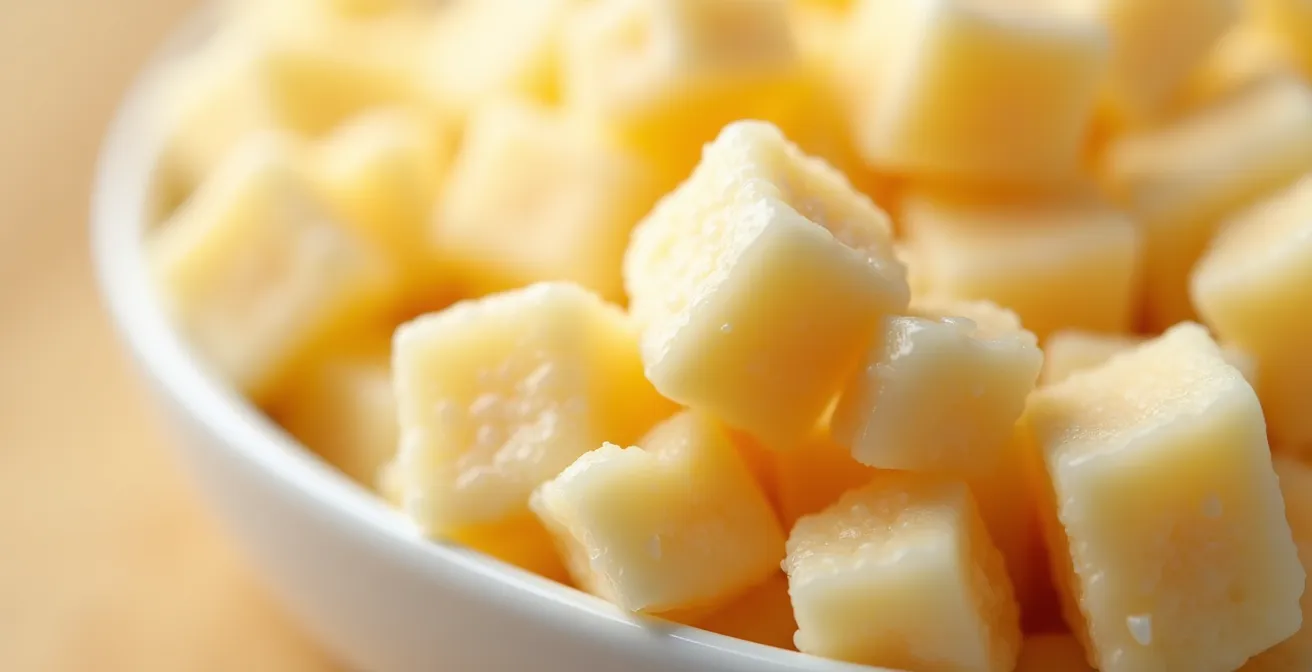
The co-op has been in operation for over a century, a testament to its quality. For the poutine aficionado, this is ground zero for freshness. Their factory, owned by local member farms, produces a staggering eight to twelve tons of cheese curds daily, ensuring that what you buy is often still warm from production. The signature “squeak” of a fresh curd is the sound of tightly bound protein strands rubbing against your teeth. This sound diminishes as the cheese refrigerates and the proteins relax. Therefore, the ultimate test of freshness is auditory. A silent curd is a day-old tragedy.
Your Checklist: Verifying Cheese Curd Freshness in Ottawa
- Listen for the “squeak”: Ask for a sample if possible. The audible squeak is the definitive sign of freshness, synonymous with authentic poutine.
- Check the temperature: The freshest curds are often sold warm, in bags, and do not require refrigeration for the first 24 hours.
- Time your visit wisely: For the best chance at warm curds, plan to arrive at a producer like St-Albert between 10 am and 2 pm, when fresh batches are typically being packaged.
- Ask the key question: Don’t be shy to use a bit of French to show your seriousness. Ask, “Est-ce que le fromage a été fait aujourd’hui?” (Was the cheese made today?).
- Observe the production: At St-Albert, you can watch the cheese-making process through large windows, giving you a direct connection to the product’s origin and quality.
Understanding this commitment to a primary ingredient is the first step. The same level of dedication and respect for tradition is required to understand the poutine’s sauce. The quality of the curd is non-negotiable, a standard that sets the stage for the rest of the dish.
Why Does My Tourtière Crust Turn Soggy When Baked with the Filling?
At first glance, the technicalities of a meat pie seem far removed from poutine. However, the tourtière, another cornerstone of Quebec’s culinary identity, holds a crucial lesson in texture and moisture management that directly applies to our sauce investigation. The dreaded “soggy bottom” of a tourtière is caused by a hot, wet filling leaching into the bottom pastry. The historical solution to this problem reveals a key principle: the choice of fat. While modern recipes often call for butter or shortening, traditional Québécois pie crusts relied on a different ingredient: lard. According to culinary records, lard was the primary fat in early colonial Canada when other options were scarce or expensive.
Lard creates a crust that is not only exceptionally flaky but also far more water-resistant than one made with butter. This understanding—that an ingredient must perform a structural function to protect texture—is a philosophy we must apply to poutine. A great poutine sauce should coat the fries, not dissolve them into a starchy mush. It must have enough body and the right composition to respect the integrity of the crispy fry, just as a good pie crust must respect its own integrity against a moist filling.
This comparative table illustrates the functional differences between these fats, a lesson in how ingredient choice impacts the final structure.
| Fat Type | Flakiness | Moisture Resistance | Traditional Use |
|---|---|---|---|
| 100% Lard | Extremely flaky | Superior water resistance | Historical Quebec standard |
| 100% Butter | Moderately flaky | Lower resistance, richer flavor | Modern adaptation |
| 50/50 Blend | Very flaky | Balanced performance | Contemporary compromise |
Furthermore, professional bakers insist that the meat mixture must be completely cooled before it’s placed in the crust. This simple step dramatically reduces the steam and moisture that cause sogginess. This parallels the preparation of a great poutine sauce, which is often made in advance, allowed to cool and mature, and then reheated for service. It’s a lesson in process and patience, reminding us that the final result depends on careful preparation, not just a list of ingredients.
How to Taste-Test Maple Syrup to Identify Grade A Dark vs Amber?
To understand the nuances of a heritage poutine sauce, one must first learn the language of Quebec’s most famous flavour: maple. Simply tasting sweetness is not enough. A food lover must train their palate to identify the subtle, complex notes that differentiate one grade of maple syrup from another. This skill is directly transferable to discerning a great poutine sauce from a mediocre one. Maple syrup is a perfect training ground because its official grading system is based on both colour and flavour profile, providing a clear vocabulary for what we taste.
The progression is logical. You begin with the lightest grade and move to the darkest, allowing your palate to adjust and register the increasing intensity. The key is to taste them at room temperature (around 20-22°C or 68-72°F), as cold temperatures dull the volatile aromatic compounds that define their character.
A Foodie’s Guide to Maple Syrup Tasting
- Start with Golden, Delicate Taste: This is the lightest syrup, often from the first sap run. It has a mild, almost floral sweetness. It’s the benchmark for delicacy, ideal for pancakes where you don’t want to overwhelm other flavours.
- Move to Amber, Rich Taste: This is the classic, all-purpose table syrup. You’ll notice a more pronounced caramel colour and a richer, rounder maple flavour. This is the balance point for many.
- Finish with Dark, Robust Taste: Produced later in the season, this syrup is much darker and has a strong, more complex flavour with notes of caramel, toffee, and even a hint of coffee. Its intensity makes it perfect for baking and cooking, as its flavour won’t get lost.
This exercise does more than just teach you about maple syrup. It teaches you to think about flavour in terms of depth and complexity. A great poutine sauce is not one-note; like a Dark syrup, it has a robust base flavour but also contains subtle notes that provide a richer experience. Training your palate to pick out the differences between Amber and Dark syrup is the first step toward recognizing the hidden notes in a perfectly balanced sauce.
Charcuterie Board: Which Canadian Cured Meats Are Truly Artisanal?
The pursuit of authentic poutine sauce is much like curating an artisanal charcuterie board. In a supermarket aisle filled with mass-produced products, the challenge is to identify what is truly special and rooted in tradition. Anyone can buy pre-packaged salami, but a connoisseur seeks out the saucisson from Charlevoix or the uniquely spiced kubasa from the Prairies. This quest for authenticity requires looking beyond the marketing and understanding the markers of genuine craftsmanship.
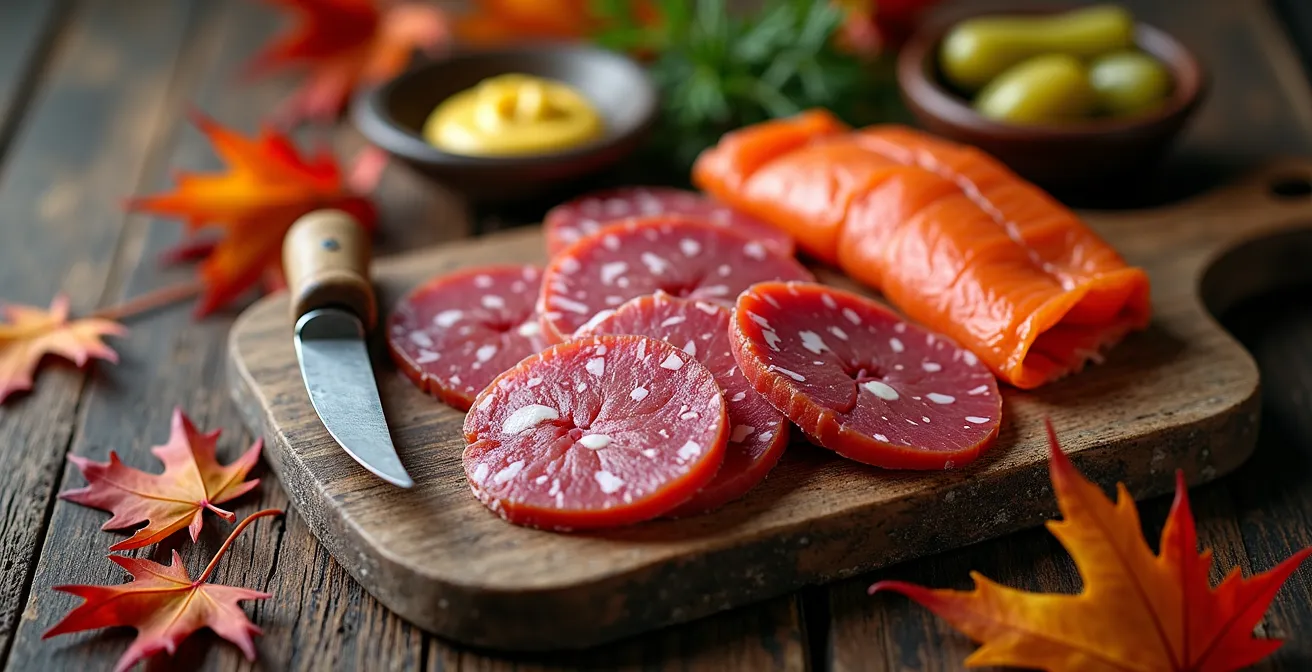
An artisanal cured meat tells a story. Its label might name the specific farm where the animal was raised. Its ingredient list will be short, noticeably lacking in excessive nitrites or fillers. It will often proudly mention its aging process or the use of unique Canadian ingredients like maple, wild berries, or local game. This is the same lens through which we must view poutine sauce. A generic sauce is made from anonymous powders and broths. A heritage sauce, however, carries the signature of its region, its *terroir culinaire*, even if those ingredients aren’t listed on a restaurant menu.
To identify an artisanal product, you must become a detective. You learn to look for regional specialties, to visit producers directly when possible, and to ask questions. This mindset is essential for our investigation. We are not just looking for a recipe; we are looking for the story and the specific, often local, ingredients that give the sauce its authentic character. Just as a true charcuterie board showcases the diversity of Canadian curing traditions, an authentic poutine sauce is a liquid expression of Quebec’s specific culinary history.
How to Safely Can Pickled Beets According to Modern Food Safety Standards?
Here, we arrive at the heart of the matter, the central clue to our entire investigation, hidden in a humble jar of pickled beets. For generations, canning and preserving were not hobbies but essential survival skills in Quebec. The root cellar and the pantry (*le garde-manger*) were the family’s lifeline through the long winters. These preserves, born of necessity, became foundational flavour components in the region’s cuisine. Pickled beets, with their earthy sweetness and sharp, vinegary tang, are a prime example.
The safety of canning hinges on one critical factor: acidity. To prevent the growth of harmful bacteria like *Clostridium botulinum*, pickled vegetables must be canned in a brine that creates a high-acid environment. Food safety guidelines stipulate that a pH of 4.6 or lower is required for safe water bath canning. This scientific reality forced generations of home canners to become masters of acidity. This mastery did not stay confined to the canning jar; it bled into all aspects of their cooking. It trained the collective Quebec palate to appreciate and expect a distinct acidic “zing” to cut through rich, fatty foods.
The Pantry Secret: The Pickled Beet Juice Connection
While modern poutine recipes have become simplified for mass appeal, a deep dive into traditional family cooking reveals a widespread practice. As noted by culinary archives and oral histories, many traditional Quebec families would add a spoonful of the brine from their homemade pickled beets or a dash of fruit ketchup (like ketchup aux fruits) directly into their poutine gravy. This wasn’t a formal ingredient; it was a *secret du garde-manger*. As documented in a study of poutine sauce variations, this practice is a key to the flavour puzzle. An analysis in *Les Trésors de l’Érable* confirms that traditional Quebec families often add a spoonful of pickled beet juice or fruit ketchup to their gravy to achieve that “secret sweet-acidic balance.” This single action perfectly balanced the savoury richness of the broth, adding both sweetness from the beets and a sharp acidic note from the vinegar, creating the complex flavour profile that commercial mixes struggle to replicate.
This is the secret ingredient. It is not an exotic spice or a rare stock. It is the judicious application of a sweet and acidic pantry staple, a technique born from the science of food preservation. It is the flavour of the Quebec winter pantry, distilled into a single, transformative spoonful.
How to Process 10 lbs of Fresh Cranberries Before They Spoil?
If pickled beets are Exhibit A in our case for the sweet-acidic balance, then cranberries are the compelling Exhibit B. Native to North America and particularly abundant in Quebec, the cranberry is another cornerstone of the traditional pantry. Its intensely tart flavour and deep red colour made it a natural ingredient for sauces, relishes, and preserves. Just like beets, the primary challenge with a large harvest of fresh cranberries is preservation, and the methods used to do so further reinforce the region’s characteristic flavour profile.
Beyond the standard sauce, traditional and modern artisans have developed numerous ways to process this versatile berry, all of which play on the interplay between its natural tartness and added sweetness.
- Cranberry-Maple Compote: Simmering cranberries with Quebec maple syrup is the most direct expression of the sweet-acidic balance.
- Savory Tourtière Relish: Combining cranberries with onions, vinegar, and warming spices creates a condiment that cuts through the richness of the meat pie—the same function required of a poutine sauce.
- Dehydrated Cranberries with Maple Sugar: Drying the berries concentrates their flavour, and a dusting of maple sugar creates a perfect sweet-tart snack.
- Cranberry-Infused Whisky: Even in beverages, the principle holds. The tartness of the berry infuses the spirit, which is then often balanced with a touch of syrup when served.
These processing methods are not random; they are a consistent application of a core culinary philosophy. The use of vinegar in a relish, or maple syrup in a compote, is all in service of taming the cranberry’s aggressive tartness and transforming it into a complex, palatable flavour. This is the exact same logic behind adding beet juice to a poutine gravy. It’s about having an acidic, sweet element on hand in the pantry, ready to be deployed to balance and elevate a rich, savoury dish. The specific fruit might change—beets, cranberries, or even tomatoes in a fruit ketchup—but the principle of the *équilibre aigre-doux* remains constant.
How to Buy Lobster Directly at the Wharf for Half the Restaurant Price?
While our main quest is inland, no culinary tour of Eastern Canada is complete without a journey to the coast. For the foodie, the allure of buying lobster directly from the fishermen who caught it is irresistible, offering unparalleled freshness at a fraction of the restaurant price. This requires venturing into the heart of the Maritimes and understanding the rhythm of the local fishing seasons. Prices and availability are dictated by the Lobster Fishing Area (LFA) seasons, which vary by region to ensure sustainability.

Navigating this system is key to getting the best deal. A pro tip for travellers is to look for the small, hand-painted “Lobster for Sale” signs at the end of driveways or at co-ops right on the wharves in towns across Nova Scotia, PEI, and New Brunswick. This is where the real transactions happen, far from the tourist markups. However, a few rules of etiquette apply. This is a cash-based economy; fishermen rarely carry credit card machines. It’s also important to know the local terminology: “canners” are smaller lobsters (under 1 lb) and are cheaper, while “markets” are the standard size. Asking for “hard-shell” lobsters will ensure you get more meat for your money, as they are older and have filled out their shells, unlike the recently-molted “shedders.”
The following table provides a general guide to the peak seasons, helping you plan your visit to coincide with the freshest and most affordable catches.
This is confirmed by a detailed analysis of Canadian fishing seasons, which helps consumers time their purchases.
| Region | LFA Zone | Peak Season | Best Buying Time |
|---|---|---|---|
| Southwest Nova Scotia | 33-34 | November-May | December-January |
| Eastern Shore NS | 31-32 | April-June | May |
| Gulf of St. Lawrence | 23-26 | May-June, Aug-Oct | May & September |
| Bay of Fundy | 35-38 | October-December | November |
Arriving at the wharf between 10 am and 2 pm, when the boats are returning, is your best bet. This direct-from-the-source experience is the essence of food tourism, connecting you to the product in the most authentic way possible—a principle that echoes our entire culinary investigation.
Key Takeaways
- The true secret of Quebec poutine sauce is not an ingredient, but a principle: the sweet-acidic balance (*équilibre aigre-doux*).
- Heritage recipes often achieve this balance using pantry staples like pickled beet juice or fruit ketchup to cut through the richness of the gravy.
- Understanding the broader *terroir culinaire* of Quebec, from tourtière crusts to maple syrup grades, is essential to grasping this flavour philosophy.
How to Navigate Old Montreal Cobblestones in Winter Without Cracking a Heel?
Our culinary journey concludes where so many begin: on the historic cobblestone streets of Old Montreal. For the winter food tourist, these streets present a final, practical challenge. They are notoriously uneven and, when coated in a thin layer of ice, treacherous. Yet, it is on these very streets that the history of our poutine sauce was written. The grey stones themselves, originally used as ballast in French and Scottish ships in the 1800s, were once trod by merchants trading the very spices and goods that would form the basis of Quebec’s cuisine, including ingredients for early versions of tourtière.
Navigating this historic landscape in winter is an art form. The key is to abandon fashion for function and to think like a local. Follow the paths worn in the snow by Montrealers; they instinctively know which stones get the most sun and which alleys are perpetual ice traps. A practical walking tour for a foodie might start at Bonsecours Market, moving along the wider and better-maintained Rue Saint-Paul and Rue de la Commune, with strategic stops at warm havens like Olive et Gourmando for lunch or Jardin Nelson for a *vin chaud* on its heated patio.
This physical journey mirrors our investigation into the poutine sauce. On the surface, the path seems straightforward, but the real experience lies in understanding the hidden texture and history beneath your feet. The challenge of the cobblestones connects the modern food lover directly to centuries of history. As you carefully place your feet to avoid a slip, you are engaging with the same physical reality that shaped the city’s commerce and, by extension, its palate. The sauce’s secret isn’t just in a recipe book; it’s embedded in the very stones of the city where it was born.
Now that you understand the historical and philosophical underpinnings of Quebec’s most famous dish, the next step is to apply this knowledge. Approach your next attempt at poutine not by merely following a recipe, but by tasting, balancing, and trusting the centuries-old principle of the sweet-acidic balance. Your palate is now your most important tool.